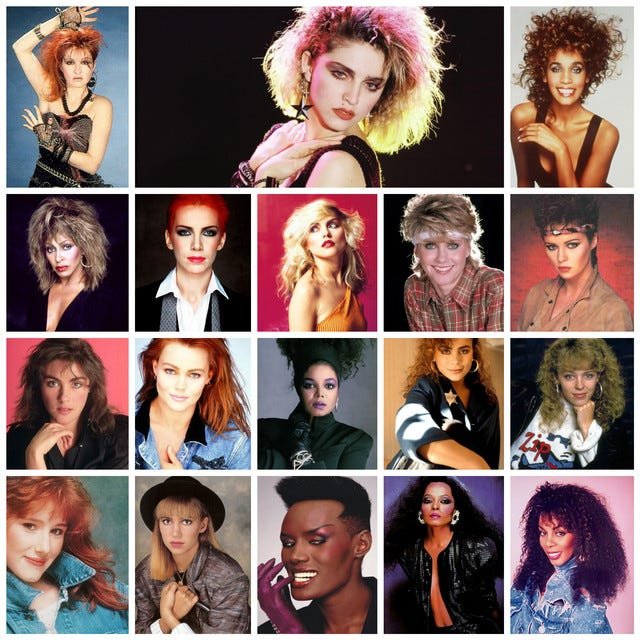
The airwaves, particularly on certain “throwback” channels, are often saturated with a shimmering, synthesized sound, a familiar rhythm that transports many back to an era of big hair, neon lights, and seemingly boundless optimism. It’s the 1980s, a decade often celebrated with fervent nostalgia, almost universally revered as a golden age of pop music. But today, I’m here to offer a contrarian, perhaps even controversial, take: Why ’80s Music Is Overrated.
This isn’t an attack on anyone’s cherished childhood memories or beloved anthems; it’s a critical, persuasive argument, meticulously constructed by someone whose own musical palate was shaped by the raw emotion of the 90s (hello, Mariah Carey and Alanis Morissette!) and the diverse sonic landscapes beyond. I understand the allure of nostalgia, but it’s time we peeled back the layers of excessive reverb and synth-pop sheen to confront a musical truth: the 80s, while iconic, were often a period of immense stylistic indulgence that, frankly, produced a lot of forgettable, often bland, sonic wallpaper.
The Problem: When Style Trumps Substance
The 80s were undeniably impactful. MTV launched, music videos became an art form, and pop stars became global icons, masters of branding and image. But beneath the dazzling surface, the decade often prioritized style over substance, resulting in a musical landscape that, upon critical re-evaluation, reveals significant shortcomings.
- The Tyranny of the Synthesizer: The synthesizer, a revolutionary instrument, became both the blessing and the curse of 80s music. It led to incredible innovation, yes, but also to a pervasive, often sterile, sound. Every song seemed to feature the same drum machines, the same synth pads, the same digital effects. This created a homogenization of sound where many songs, regardless of artist, became indistinguishable, lacking the organic warmth or raw instrumental grit of previous (or subsequent) decades. The overall atmospheric sound became a bit… artificial.
- Overproduction and Blandness: Many 80s tracks are suffocated by overproduction. Layers upon layers of synthesized sounds, gated reverb on drums, and overly polished vocals often stripped the music of its raw energy, its emotional depth, and its unique character. This pursuit of a “perfect” pop sound often resulted in blandness, sacrificing individuality for mass appeal. The emotional palette sometimes felt limited, lacking the vibrant complexity found in later eras.
- Lyrical Superficiality: While there were certainly brilliant songwriters in the 80s, a vast swathe of the decade’s pop music often leaned into lyrical superficiality. Themes were often simple, repetitive, and lacked the profound introspection, social commentary, or nuanced emotional exploration found in artists I cherish like Alanis Morissette or Adele. It was often catchy, but rarely deeply resonant.
- The “Hair Band” Problem (and its Sonic Monotony): While rock music certainly existed, the prevalence of “hair bands” in the latter half of the decade often meant a particular kind of formulaic, often repetitive, sound dominated the airwaves. Loud guitars, power ballads, and a distinct aesthetic, but often lacking the raw, diverse energy of true rock pioneers.
- Lack of Genuine Vocal Power (in the Pop Sphere): While artists like Whitney Houston certainly graced the decade with unparalleled vocal power, a significant portion of mainstream 80s pop music didn’t always prioritize raw vocal talent. Auto-tune was not yet ubiquitous, but heavy processing and a focus on image could sometimes overshadow genuine vocal prowess. As someone who profoundly appreciates vocal range and raw emotional delivery (my love for Mariah Carey and Christina Aguilera is deeply rooted in their vocal gifts), much of 80s pop simply doesn’t deliver that particular thrill.
The Nostalgia Trap: Why We Remember It So Fondly (and Wrongly)
Nostalgia is a powerful, often deceptive, force. It allows us to selectively remember the best bits, the iconic moments, and the songs that soundtracked our youth, while conveniently forgetting the vast landscape of mediocrity that also existed.
- Pop Culture Saturation: The 80s were incredibly impactful culturally. The birth of MTV, the rise of the music video as an art form, and the explosion of global pop stars meant that the music was unavoidable. This sheer omnipresence ingrained it deeply into the collective consciousness.
- Childhood Memories: For many (myself included, though I was young), the 80s were a period of childhood. Music experienced in formative years holds a special, almost sacred, place, often untainted by critical analysis. It’s the comfort of the familiar, a direct line to simpler times.
- The “Good Bits” Argument: Yes, the 80s produced undeniable classics. Michael Jackson’s Thriller, Prince’s Purple Rain, Madonna’s groundbreaking early work, U2’s anthems, and the raw energy of early hip-hop. But these iconic peaks don’t negate the vast, often bland, plains of synth-pop and hair metal that also defined the decade.
My Verdict: A Foundation, But Not the Pinnacle
I am not suggesting we erase the 80s. It was a foundational decade for pop culture, launching MTV and giving us iconic artists who continue to influence. It was the era that laid some groundwork for the visual spectacle that would become central to pop music.
However, to claim it as the ultimate golden age of music, superior to the raw, honest, and vocally powerful artistry of the 90s, or the diverse, genre-bending innovation of the 2000s and beyond, is a bridge too far for me. My personal palate, refined by decades of diverse musical experiences, ultimately finds much of its mainstream output to be thin on substance, overly synthetic, and lacking the profound emotional depth or raw artistic integrity that defines my most cherished musical connections.
So, while the 80s certainly had its shining moments, for me, it remains a decade whose pervasive sound was often more about style than enduring substance. It’s time to appreciate its legacy, but also to critically evaluate its output beyond the rose-tinted glasses of nostalgia. The musical atmosphere has evolved, and for good reason.