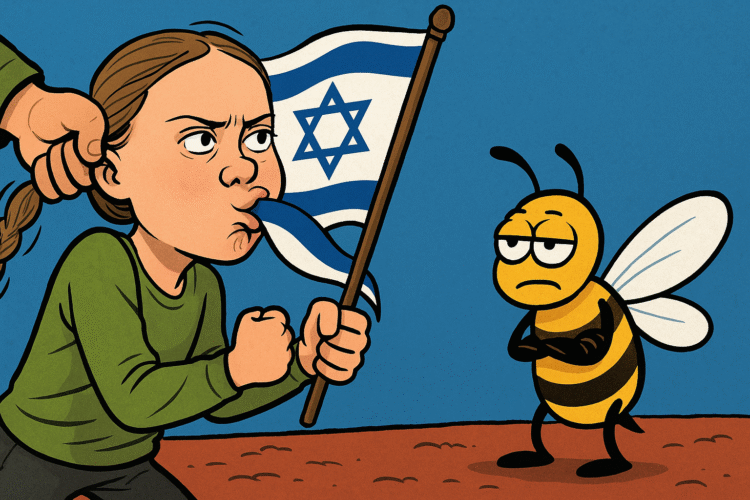
On October 1, 2025, a flotilla bound for Gaza sailed into what Israel calls “safe enforcement space,” and was met not with olive branches but steel wires, naval power, and fists on deck. More than 450 activists—sailing from over 40 countries—were hauled off armed ships in international waters, their humanitarian mission interrupted, their bodies exposed, their dignity interrogated. Among them was Greta Thunberg, allegedly dragged by her hair, forced to kiss an Israeli flag, strip searched, sleep deprived, and held in bedbug-infested cells. One ship, by miracle or cunning, evaded capture and delivered aid into Palestinian waters.
The world watches, shocked yet unsurprised. This event tells a familiar story: that symbols of kindness become pretexts for control, that humanitarianism is suspect when it crosses a blocked border, and that in a theater of war, even innocence can be framed as provocation. Let’s walk through the seizure, the suffering, the optics, the denials, and the moral logic that sees flags turned into leashes.
The Flotilla’s Mission & Interception
The flotilla’s purpose was clean: glide through naval blockade, deliver humanitarian supplies to Gaza, assert the right of relief amid siege. Activists, doctors, journalists, organizers—many names you’d recognize—counted on the moral clarity of assistance over politics.
But on the morning of October 1 (somewhere between 36 to 40 hours in custody later), over 450 were detained. Ships were boarded. Activists were restrained. No “welcome reception.” No handshake. Instead: dehydration, forced sit-downs, cold rooms, sparse food, strip searches, deficient sanitary space. Reports claim cell conditions with bedbugs, dim lighting, hours of forced standing, and the hollow, grinding fatigue of waiting in line only to wait longer.
Greta Thunberg’s story became the lightning rod. She claims she was dragged by her hair across the deck, forced to kiss an Israeli flag, left in degrading searches, vulnerable in a sea of hostility. Whether every detail is confirmed is less important now than the symbolism: the child-activist turned spectacle, the flag as a weapon, the humanitarian voice punished.
One vessel slipped the net and delivered aid into Palestinian waters. That escape is the splash of sanity in this theater: when control slips, humanity bleeds through anyway.
International Backlash & Israeli Denials
Condemnation was swift. UN Special Rapporteur Francesca Albanese compared treatment of detainees to “collective punishment.” Human rights groups demanded investigations. Journalists spread photos, voices cracked in anger, and the world remembered that flags aren’t just cloth—they are theaters of power.
Israeli officials responded with the well-worn defense: detainees were treated properly, no abuse, all were deported, all medical needs met. They framed the flotilla as lawbreaking, constant risk to naval security, a provocation dressed as charity. The standard pivot: deny the worst, admit the capture, frame it as necessary.
The moral damage, however, is inflicted outside the statements. The image of activists tied, pleading, shivering under lights, becomes the evidence. The blockade is not only on land; it is a blockade of moral imagination and international aid.
Symbolism & Satellite Battles
This interception is not just naval enforcement—it is symbolic warfare. When activists cross that line, they are silenced, their bodies become maps of control. The sea becomes a contested zone where dominion is enforced not through justice but through fear.
Thunberg’s forced kiss of the national flag is not trivial. It is a coercive ceremony: “You will kneel to my symbols, or you will be broken.” It is ritual humiliation in the name of sovereignty. It is performative dominance: capturing not just bodies but loyalty.
That one ship evaded capture—that single instance of aid reaching Gaza—turns the operation’s narrative. It says: control is never perfect. The blockade cracks. The law leaks. The heart pushes through.
The Operational Stake
This incident is not just moral; it’s strategic. Israel’s naval blockade is a linchpin of its siege strategy. Each successful interception is pitched domestically as proof that the blockade works, that pressure pins Gaza tighter, that humanitarian aid must be filtered through Israeli systems. Each failed capture (the ship that got through) becomes a threat to narrative stability, a crack in the architecture of control.
For Israel, this is precedent: how many flotillas will they allow to move? How many activists will dare enter naval zones? How much international pressure will they absorb before the cost outweighs blockade security? Their posture rests on deterrence: every interception should dissuade the next, every story of mistreatment should warn others. It is a deterrence of kindness.
Moral Paralysis & the Logic of Siege
In siege logic, kindness becomes subversion. Delivering water becomes a provocation. Delivering food is infiltration. Standing calmly in international waters is a threat. The act of relief defines the perpetrator. The law becomes weaponized: international maritime right is trumped by a national security claim. The right to humanitarian passage ceases to exist when the blockade is absolute.
The detainees’ suffering doesn’t matter to the logic. The message does. The humiliation matters more than the cure. The show matters more than the supply. The act of capture is the signal that no crossing, no matter how righteous, goes unpunished.
The Danger of Normalization
We must resist the impulse to file this under “another crisis elsewhere.” Because normalization is the greatest victory of authoritarian spectacle. If the world shrugs and moves on, the logic metastasizes. Sieges abroad become blockades at home. Humanitarian zones shrink. Every border becomes a theater of control.
We end up in a world where protest yachts are seized, where aid ships are suspicion, where kindness is subversion, and where the only safe geography is the interior. But the interior becomes trap when state control is total.
What Resistance Looks Like
Yes, protest nonviolently. But demand accountability. Demand naval logs, access to detainee testimonies, independent monitoring, international observers. Claim visibility as power. Refuse anonymity.
You must call this not a tragedy, but a tactic. The interception is not a failure of humanity—it is the method. Dissenters should not ask for privilege. They should demand the right to trespass for mercy.
The world must refuse the frame: this was not an accident, not a mistake. It was designed. It was anticipated. It is meant to be a spectacle of control. The art of modern siege is not walls of stone but walls of fear. Break them with presence, exposure, testimony.
Final Reflection
The flotilla interception is not just a headline. It is a lesson in how power abuses symbolism, how justice is suspended at sea, how mercy becomes suspect. It is the logic of blockade made kinetic. It is a demand: demonstrations allowed on land, but the sea remains forbidden territory—even for nurses, doctors, grandmothers.
When a flag becomes a leash, and kindness punished, we see clearly the price of control. The detainees suffered in ships. But the world suffers in silence. That silence is the real blockade. And until that silence is challenged, the sea is no longer a zone of hope—it is a zone of terror.
But one ship got through. That ship is a crack in the siege. If we speak, watch, demand—maybe the next will, too.