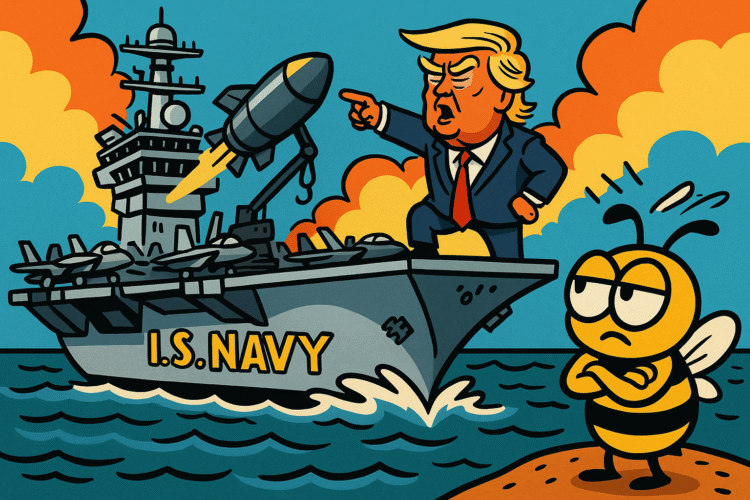
There’s a plain, brutal fact: the United States’ most advanced super-carrier has been pulled from its European itinerary and ordered into the Caribbean. The USS Gerald R. Ford — along with its air wing, escorts, surveillance stack and thousands of sailors — is now headed into the U.S. Southern Command region. The official story: it’s part of the administration’s “boat-bombing” campaign in the Caribbean, near Venezuela, morphing from seaborne interdictions of alleged narco-boats into a floating platform for possible land strikes.
President Trump is publicly touting “next phase” options; Defense Secretary Pete Hegseth frames it as necessary to “degrade and dismantle” cartel-linked targets. But ask about the legal authority, the chain of command, the mission edges? Crickets. What was once a regional deployment is now turned into a show of force—and the show has agenda.
The Build-Up: From Boats to Battleship
Since early September the U.S. has launched multiple air- and sea-strikes on small ships alleged to be drug trafficking vessels. The death toll: dozens. Meanwhile intelligence support sources say covert CIA activity in Venezuela is authorized by the President, real-time targeting is happening, and the carrier strike group is the next chapter. The shift is unmistakable: interdiction at sea → potential strikes on land.
One carrier doesn’t just patrol; it projects power. Escort destroyers, F-35s, surveillance aircraft, supply ships—together, this is a regional war machine, not a routine drug-bust crew. The Ford was originally slated for Europe; now it’s being retrofitted for the Caribbean. That repositioning sends a message louder than any press release.
The Legal and Strategic Question-Marks
And here’s where things get messy: does the administration have a clear method behind the madness? The legal predicates they’re invoking are flimsy. There’s no fresh congressional authorization of force (no new AUMF). Instead they lean on novel justifications—drug mortality as national-security threat, “protect federal property” toolkits once deployed for protests reused for narco campaigns. Oversight? Minimal. Transparency? Sparse. The carrier is already in motion while the legal debate stalls behind it.
And then there are the practical risks: if land strikes begin—labs, airstrips, regime-adjacent nodes—the question of civilian harm, hostages, urban escalation, retaliation becomes real. What happens when a fighter jet takes off from the Ford and bombs near a village? The carrier becomes less deterrent, more staging ground. The difference between “counter-narcotics” and “regime change by default” blurs.
Timeline: Europe One Day, Caribbean The Next
Here’s the progression: The Ford was en route or operating in the Mediterranean for its European deployment. Then—boom—top brass announce it’s being diverted to the Caribbean. Reports confirm that three destroyers will escort it; other warships are already in the area. Analysts say this repurposing is the first step toward making the carrier a platform for land strikes under SOUTHCOM.
Meanwhile, the administration keeps the narrative of “drugs” and “narco-trafficking,” even as analysts ask: how many of these targets are vessels versus land-based infringements? How soon before the carrier is repositioned not just off the coast but shadowing jungle airstrips and regime-controlled terrain?
The So-What: Why This Matters
Because this isn’t routine. This is a super-carrier being redeployed for an ambiguous mission with vague legal underpinnings and booming strategic consequences. The so-what breaks down this way:
- Precedent: A president adds a super-carrier and secret authorities to a policy with wobbly law. If permissible now, what next?
- Blurring Lines: If a carrier meant for sea-control becomes a land-strike base without formal war-declaration or oversight, you’re rewriting what “military campaign” means.
- Escalation Risk: The Caribbean becomes not just interdiction zone, but a staging sandbox for greater force. The region may drag into conflict, hostages may surface on land, supply chains may react.
- Alliance & Insurance Shocks: Partner militaries, insurers, banks watching the region will ask how far they want to ride U.S. escalation. A carrier’s presence is more than optics—it’s investment signal.
- Domestic Oversight Gap: While the carrier moves, Congress and courts may lag. If escalation becomes embedded, oversight becomes reactive, not preventative.
In short: the carrier isn’t just movement of steel. It’s movement of thresholds.
The Carrier as Campaign Stage
Consider the symbolism: the Ford is billed as America’s most advanced nuclear-powered flattop. It carries 75+ aircraft, radars, missiles, and global reach. Position it near Venezuela under the banner of “narco threat”—you convert a regional law-enforcement posture into global war-fighting architecture. It’s no longer just interdiction—it’s power-projection theatre.
Trump publicly links the redeployment to his drug-war narrative; he hints at land strikes. The naval order is short, but the signal is long: the show is shifting from sea lanes to regimes. The carrier becomes a floating billboard for “American resolve”—while the actual mission may shift into territory traditionally reserved for allied consent, treaty frameworks, congressional declarations.
Neutralising the Critics? Maybe—but the Cost is Real
The administration claims this is smart escalation: combine air, sea, intelligence for hemispheric security. But what they gloss over: the cost. What if a strike mistakenly hits civilians? What if retaliation hits American shipping? What if the legal fount cracks and lawyers argue retroactively about war powers? What if the region slides into its own quagmire?
The carrier, meant for deterrence, becomes an active participant. That’s operationally fine if objectives are clear and legal authority visible. It’s less fine if the objective is ambiguous and the law opaque. Then you have theatre with casualties.
Incoming Checkpoints to Watch
- Repositioning Speed: How fast the Ford strike group arrives in SOUTHCOM waters gives you the tempo. If it’s weeks—not months—you’re in escalation mode.
- Approval for Land Strikes: Watch for White House document leaks or statements authorizing strikes against labs, airstrips, regime-adjacent nodes.
- Congress & Courts: Will Congress demand briefings? Will litigation pop up challenging the use of force? Will precedent harden before oversight catches up?
- Mission Creep: Will the carrier’s mission expand beyond narcotics pathways into urban or jungle terrain? Will the public explanation shift while the mission stays secret?
- Carrier as Brand vs. Tool: Will we see PR photo-ops of the Ford near Caribbean ports? Or will we see it resume jet launches against land targets? The difference is between a theatre piece and a war plan.
Final Thought: Strategy vs. Spectacle
At the end of the day, we must ask: why does a carrier cost $13 billion if it’s not deployed for serious contingencies? If we’re using it for the drug trade and calling it narco-warfare, we’re handing semantics over to spectacle. But if it’s repurposed for regime pressure with looser law, we’re handing strategy over to suspense.
The Ford’s deployment should not just worry adversaries—it should concern believers in oversight, rule of law, and democratic accountability. Because when you pivot a super-carrier from Europe to the Caribbean under a drug-war banner with hints of land strikes, the next question isn’t whether you can do it—it’s whether you should, and under what authority.
The treasure in this shift is not only tactical—it’s constitutional. And when the sea becomes transparent to the credentials of war, the wave you surf may not carry you home.