A glossy woman-led firm, cameo A-listers everywhere, and a 0 % critical shockwave—this is the story of spectacle without substance
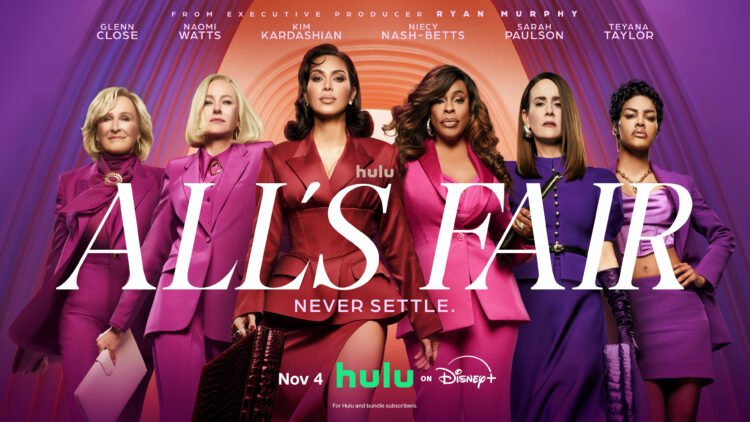
Here is the paradox of 2025 streaming culture: You bring together a high-budget woman-led legal drama, you drop it on a major platform, you tune every camera for maximum gloss and you still end up with a fiasco. That paradox has a name now: All’s Fair. Created by Ryan Murphy with co-creators Jon Robin Baitz and Joe Baken, starring Kim Kardashian, Naomi Watts, Niecy Nash‑Betts, Sarah Paulson, Teyana Taylor and Glenn Close—and yet when the critics arrived they declared it “fascinatingly, incomprehensibly, existentially terrible”.Cracked.com+3The Guardian+3Forbes+3
The Pitch and the Launch
The premise sounded audacious: a group of elite divorce lawyers, all women, leave a male-dominated powerhouse and form a new firm in Los Angeles. Their client roster is glittering, their settlements six-and-seven figures, the wardrobe impeccable, the stakes glamorous. The idea: sweep away old norms, reclaim law as spectacle and feminism as luxury. The cast, of course, was A-list: Kim Kardashian plays Allura Grant; Naomi Watts is Liberty Ronson; Nash-Betts takes Emerald Greene; Teyana Taylor is Milan; Sarah Paulson is rival Carrington Lane; and Glenn Close appears as Dina Standish, the seasoned mentor.Wikipedia+1
Behind the scenes the context amplified everything. Ryan Murphy’s brand is gold—American Horror Story, Glee, Pose. Hulu and Disney placed the show in prime streaming real-estate. California tax-credit budgets were leveraged, production values high. The launch plan? Three episodes dropped all at once for binge credibility, followed by a weekly rollout to keep conversation alive. Teasers promised “divorce is the new battlefield”. The trailer dropped in early October. Then, November 4 2025: premiere.Deadline+1
The Breakdown
Reviews arrived fast—and brutal. On Rotten Tomatoes the initial shows reported a 6 % approval, then in further reporting quotes suggested a zero percent scenario.EW.com+2Forbes+2 The Guardian’s Lucy Mangan wrote of the debut: “I did not know it was still possible to make television this bad. Fascinatingly, incomprehensibly, existentially terrible.”The Guardian Critics highlighted failing scripts, disjointed story arcs, a bizarre tone that refused to commit to camp or competence, and Kim Kardashian’s lead performance as stiff, affectless, and unanchored.New York Post+1 Meanwhile industry watchers noted the imbalance: A-list cast, top-tier production but no idea how to tell a story.
Yet some defenders emerged. A few outlets flagged Nash-Betts as a bright spot, a performer who seemed alive in a sea of frozen performances.EW.com And some viewers embraced the so-bad-it’s-good potential. But on balance the sentiment was: this was a disaster of ambition without architecture.
The Timeline of Splat
- May 2025: Teaser trailer unveiled, cast announced, social media hype builds.Hypebeast+1
- Summer 2025: Production wraps. Studio invests heavily. California tax credits and platform promotions begin.
- November 4 2025: Hulu drops the first three episodes.
- November 5 2025 onwards: Critics publish scathing reviews. Headlines like “worst TV drama ever made” and “crime against television” proliferate.New York Post+1
- Weekend post-launch: social buzz shifts from glamour to memes. Industry chatter questions whether star power alone can salvage a platform-set legal drama.
- November second week: Weekly rollout continues, but clearance of “first wave” reviews leaves no safe haven for bounce-back.
The Industry Context—Budget, Platform, Tax
Platform-wise, Hulu is evolving, Disney’s hub strategy in motion. Murphy’s name gives weight. But the budget was likely inflated. Guest stars, A-list women leads, high fashion, luxury sets—all indicate premium cost. Streaming economics demand both clicks and completion. Critics might pan a show, but if viewership is strong it can survive. Yet in this case the early reviews harmed word-of-mouth before the algorithm had a chance to do its work.
Tax-credits in California were reportedly leveraged, meaning the upside risk was lower for producers—but reputational cost rises when a show this visible flops. Murphy’s brand takes damage. Platforms evaluate whether star vehicles still function in the era of algorithmic taste. Casting Kardashian in a dramatic lead role when her acting credentials were limited looked more like a promotional gambit than creative decision.
The Reception Divide
On one hand are the camp defenders: viewers who watch for fashion, cameos, absurd lines, “girl-boss divorce drama shows”. They argue the show “knows what it is” and thus is intentionally extravagant. On the other hand are the critics and serious viewers who demand coherent scripts, dramatic stakes, character arcs. They find neither in All’s Fair. The divide is not just taste—it is about values. Is television allowed to be pretty fluff? Or must it also be genuine?
Kim Kardashian’s performance quickly became the focal point. For a global celebrity, stepping into a scripted drama is always risky. But when the show around her also fails, the performance is magnified. Critics describe her delivery as “stiff and affectless”. The show’s own scripts give her little to do beyond pose in designer suits and issue vague directives. The fact that she also served as executive producer complicates the judgment: producer credits rarely give leads immunity from critique.
Near-Term Checkpoints: Will This Recover or Rule?
Here is what to watch now that the premiere bubble has burst:
- Ratings and completion data. If the show’s premiere and second week see high viewership and viewers stick through, the platform may gloss over critical reception. If drop-off is sharp, cancellation risk spikes.
- Writers’-room corrections. Streaming shows can pivot. Will the writers improve dialogue, deepen characters, or lean further into camp in response to criticism? A mid-season course-correction could rescue both tone and narrative.
- Kardashian’s real-world law narrative vs. on-screen. She is reportedly studying for the California bar. Does her role as a lawyer in the show boost or hurt that narrative? If the show tanks visibly, it could undermine her professional transition.
- Guest star buzz and algorithmic placement. The series features cameos and high fashion sets. Can built-in celebrity appearances attract viewers regardless of scripts? Might placement in Hulu’s algorithm elevate it beyond critique?
- Media framing of the dual progress narrative. The show includes a predominantly female cast, women-led firm, a queer friendly sub-text. Can the press say: yes, this is progress in representation, and also a case study in star-powered marketing gone wrong?
Why This Matters
On the surface this might read like entertainment news fluff: a show that flopped despite big names. But deeper it reveals something about how modern television works. Star power, platform budgets and high production values are no longer sufficient guarantees of success. In the streaming age viewers demand substance even when they watch for style. Algorithmic discovery means the first impression must land. And when a show loudly markets identity advantages—female empowerment, queer-friendly, star lead—then narrative coherence and craft still matter. Representation doesn’t excuse bad writing.
Moreover, the industry risk here is two-fold. For streaming platforms budgets are real, cancellation costs high. If star vehicles cannot land, the next tier of creators will face harder scrutiny. For Murphy’s brand, this failure serves as a reminder that even a powerhouse producer needs narrative discipline. For Kardashian, the vehicle undercuts her actor-turn. For viewers who care about women-led firms and empowered characters, it suggests that representation must be matched by narrative authenticity, not just headline casting.
The Final Appraisal
From a liberal cultural lens that values both representation and quality, All’s Fair sits in a strange space. On one hand it attempts progress: women in law, power reversed, voices prominent. Good. On the other hand it does so through a spectacle machine that forgot substance. The real issue is not that a show failed. It is that a show built on progress failed to deliver progress. The women-led firm is aesthetic not grounded, the empowerment line reads like copy, and the celebrity casting overrides character development. Representation without narrative risk is insufficient.
The cultural ledger is clear. For every moment of potential—A-list women, queer sub-texts, production gloss—there is equal measure of wasted opportunity: scripts that don’t land, characters that don’t expand, star turns that freeze. The cause of women’s stories is not helped by a show that collapses under its own shimmer. That mismatch matters. Because when viewers see promise and get pandemonium, the narrative of progress becomes suspect.
Section Title: The Star-Power Audit
This is more than a show. It is a test case of whether big names, big budgets and platform privilege can substitute for story. The audition is now live, in viewers’ living rooms and critics’ aggregated scores. If All’s Fair becomes a comedy of so-bad-it’s-good for a niche, that will be its legacy. If it rebounds, we will call it “so bad it pivoted.” The more important question is what the industry takes from it: star vehicles can still shine, but they must earn it. Otherwise the shine becomes glare and the fairness promised becomes the vanity of production value. In that balance between moment and movement this show may not just stumble—it might serve as the cautionary exemplum of representation without roots.