Amazon Author Page | Read the Book — Free with Kindle Unlimited
In a town where casseroles are a currency and judgment is passed through prayer requests, The Things We Forgot is a love letter to survival—quiet, messy, unspectacular survival. It’s a story where nobody says the right thing, people apologize through behavior not words, and grief clings like humidity.
This is not a story about healing. It’s about maintenance.
Why I Wrote The Things We Forgot
I wrote this book for anyone who’s ever loved someone who couldn’t say it back. For anyone who’s ever stayed when leaving might’ve been easier. For the queer kid who was told family was conditional—and the adult still flinching at the echo of that lie.
I wanted to write about avoidance—the kind that calcifies over time. Avoidance between fathers and sons, between truth and politeness, between grief and whatever limps in after. In The Things We Forgot, no one has a dramatic monologue that fixes everything. They burn dinner, then leave the back door open. They drop a casserole off, then judge your shoes. They fall in love sideways, if they fall at all.
“This is not a story about healing. It’s about maintenance. The daily, dull, beautiful work of building something real with people who are still learning how to stay.”

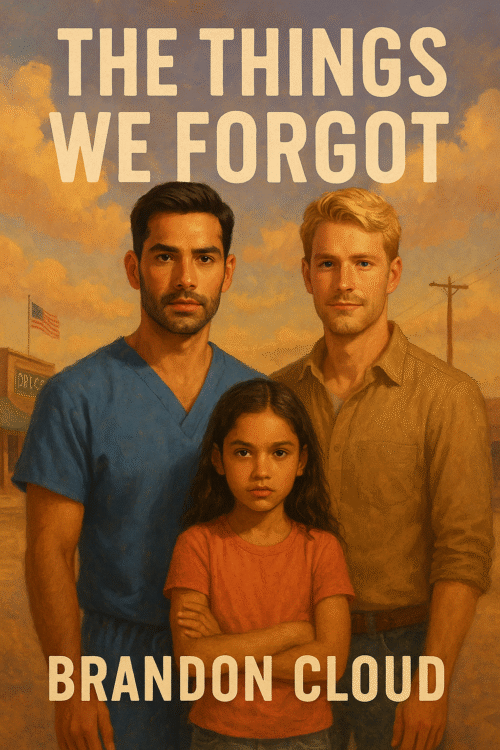
At its core is Cristian—a dry-witted ER nurse dragged back to Dry Creek to care for his estranged grandmother. He’s not here to reconnect. He’s not here to be forgiven. He’s here because no one else would sign the paperwork.
Instead, he finds himself orbiting Cory—a grief-numbed widower still texting the ghost of his dead wife—and Cory’s daughter Gabriela, a clinically blunt diabetic child who refuses to let adults lie to themselves.
Why Quiet Queer Stories Matter
We are overdue for queer stories that aren’t about being palatable, performative, or proud on schedule. Stories where queerness is lived, not explained. Where a kiss isn’t a climax, but a question. Where survival doesn’t come with a bow.
There is something radical about a story where the queer protagonist isn’t a martyr or a punchline—but someone who makes breakfast, checks blood sugar, and tries not to flinch when his hometown looks through him.
“I wanted to write about casseroles that feel like threats, about the tension of small-town mailboxes, about what happens when a man returns home not because he wants to, but because no one else would sign the power-of-attorney paperwork.”
Queer fatigue is real. And so is queer resilience. This book doesn’t resolve that tension—it just holds it, breathes through it, and keeps going.
On Growing Up in a Small Town
Growing up in a small town means knowing how to read a room before you learn to read. It means hearing your name in a prayer circle but never in a will. It means no one uses slurs outright—just pointed silences and pamphlets about ‘family values’ slipped into your grocery bag.
I know the sharpness of being tolerated. The sting of being gossiped about under the guise of care. The aching suspicion that even kindness is conditional.
“They fall in love sideways—through dry laundry, low blood sugar alarms, and a child’s brutal emotional accuracy.”
The Things We Forgot doesn’t punish Cristian for surviving the only way he knew how—with deflection, with distance, with gallows humor. It doesn’t reward him with transformation, either. It just gives him a small, inconvenient community—and the chance to maybe, possibly, stay.
Queerness Is Not Always Early or Loud
Some queer people don’t come out in high school. Some marry young. Some bury themselves in other people’s needs until there’s nothing left but silence and a slightly off-center mirror. Cristian didn’t name his queerness until much later. That doesn’t make it less real. Just harder to unravel.
“I believe in stories where queerness is not explained, just lived. Where grief doesn’t end, but shifts shape.”
There’s a profound courage in quiet awakenings—especially when they arrive in the wrong place, at the wrong time, toward the wrong person. That’s what Cristian and Cory stumble through: the possibility that what’s left after grief isn’t healing, but maybe something worse—hope.
For the Emotionally Intelligent Messes
The Things We Forgot is for readers who like their stories like their casseroles: overbaked, lumpy, a little sad—but still nourishing. If you loved A Man Called Ove, A Little Life, or Mary Gaitskill’s Don’t Cry, you’ll feel at home here.
“Love, here, is not a grand gesture. It’s a post-it on the fridge. A refill of test strips. An apology that never uses the word sorry, but gets the kid’s lunch packed anyway.”
This isn’t about coming out. It’s about coming back. About sitting with a version of yourself you left behind in a town that never said your name right. About staying—not because you’ve forgiven anyone—but because the house is crumbling and the kid across the street needs her carbs counted.
Final Thought:
Some books offer escape. The Things We Forgot offers something quieter: company. It won’t fix you. But it’ll sit with you in the sagging house, through the dry heat and the weird casseroles, and remind you that sometimes, survival is the rebellion. Staying is the love story.