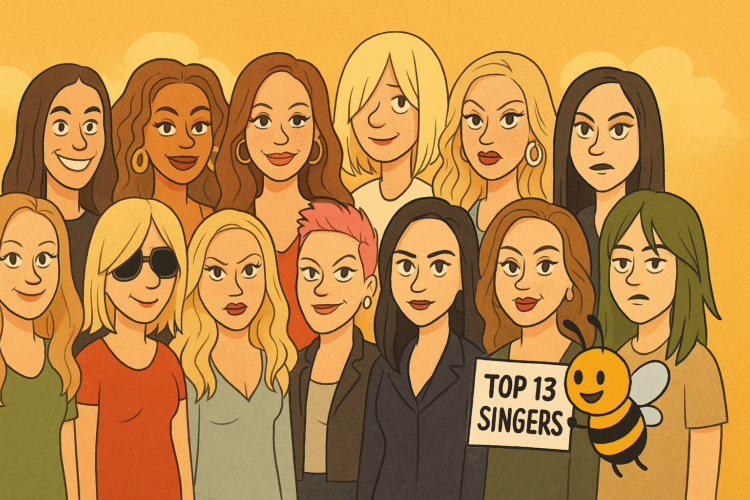
Growing up queer, biracial, abandoned, and too often invisible, I didn’t have a roadmap. What I had were songs—other people’s stories sung like confessions, shouted like rebellion, whispered like prayers. These artists didn’t just entertain me; they saved me. They gave me language for my own sadness, resilience for my own survival, and proof that sometimes, when family fails you and love forgets you, music will still hold you.
This isn’t a list in any strict order—because survival is never linear—but these are the voices who carried me through.
Mariah Carey
Mariah Carey wasn’t just the first voice that floored me—she was the first to make me believe someone out there understood the wound of being both visible and invisible at the same time. Her voice was church and diary in one: soaring, confessional, able to shatter glass but also to whisper in ways that felt like she was sitting on the edge of your bed.
What made her more than a pop star for me were her emotional songs—the ones too raw for radio, tucked inside albums like secrets you only find if you’re listening closely.
Vanishing from her debut was one of those songs. She was barely out of her teens, yet already singing about the fragility of holding on, about things disappearing no matter how much you try to grip them. As a child clinging to people who walked away, it sounded like prophecy. “Vanishing, disappearing, floating into thin air.” I played it when I felt myself dissolving, when I worried I was fading out of people’s memories.
Then there was Outside. That one struck me to my core as someone biracial, queer, perpetually caught between categories. “It’s hard to explain, insecurities I’ve had… Outside, inside I’m the same.” That lyric gave me language for the identity confusion I lived in. No one in my daily world talked about what it felt like to belong nowhere, to be “half” of something in a world demanding you choose sides. Mariah sang it without apology.
Looking In from Daydream was another dagger. “You look at me and see the girl who lives inside the golden world.” That was me—always smiling, always performing, always projecting competence. But “all the things you’ll never know” echoed my private reality: the loneliness, the abandonment, the scars no one saw. Listening to her sing it felt like having my own mask described back to me.
Close My Eyes from Butterfly has haunted me for years. “I was a wayward child, with the weight of the world that I held deep inside.” She wrote my childhood in those lines. I was too young to carry what I carried, too young to feel that much responsibility, too young to know words like trauma but already fluent in it. That song has always been proof that someone else lived that too—that someone else turned it into melody instead of madness.
And of course, Butterfly itself. It’s her emancipation song, her plea for release. “Spread your wings and prepare to fly.” Leaving behind what hurts you is always bittersweet. I felt that acutely when I finally broke ties with people who abandoned me. The liberation wasn’t pure—it came with grief, with longing for a love that never really existed.
But Mariah didn’t just sing the ache—she sang the ascent. She gave me permission to believe in resilience. Hero became one of my earliest anthems. It was corny to some, but to me, hearing her sing, look inside you and be strong, was the first time I believed maybe survival could come from within, not from the family that had abandoned me. Later, Can’t Take That Away (Mariah’s Theme) became a mantra. She fought her label to release it, and the lyrics felt like armor: They can say anything they want to say… but they can’t take that away from me. That song made me feel untouchable, even when I was most fragile.
Then there was Make It Happen, her testimony of poverty, faith, and survival. “Not more than three short years ago, I was abandoned and alone.” That line seared into me. For a kid left behind, it wasn’t just a lyric—it was a roadmap. She wasn’t speaking metaphorically. She was telling the truth, and in doing so, she gave me proof that neglect doesn’t have to be the last chapter.
And when she gave us Through the Rain, her self-declared theme song, it felt like she was speaking directly to people like me. “If you keep falling down, don’t you dare give in.” I can’t count how many nights I replayed that chorus until I could convince myself the storm would eventually pass.
Her heartbreak catalog became my survival manual. “Can’t Let Go,” “Love Takes Time,” “We Belong Together”—all proof that love and abandonment live side by side. She sang desperation without shame, yearning without pretense. And when she sang “Without You,” the ache was so absolute it nearly felt holy.
Mariah’s artistry is often reduced to high notes and Christmas hits, but for me she was the emotional cartographer of my life. She mapped out the loneliness of being biracial (Outside), the invisibility of hiding pain behind perfection (Looking In), the exhaustion of growing up too fast (Close My Eyes), the devastation of heartbreak (We Belong Together), and the bittersweet freedom of letting go (Butterfly).
For a queer, biracial kid who never felt enough, her music was proof that not-enoughness could still sound transcendent. That being “outside” didn’t mean you were broken. That heartbreak could be both devastating and survivable. That your voice—cracked, aching, imperfect—was still worthy of being heard.
Jewel
Jewel’s Pieces of You was one of the first records that taught me music didn’t have to be shiny to be true. Where Mariah gilded vulnerability into cathedral-sized ballads, Jewel cracked it wide open and left it splintered. She whispered in plainspoken poetry about abuse, shame, and loneliness in a way that felt almost too close for comfort.
“Foolish Games” could have been torn straight from my own diary—the lopsided intimacy, the longing that turned into invisibility. Every note dripped with the ache of wanting someone who couldn’t, or wouldn’t, see you. It was the first time I realized that heartbreak wasn’t reserved for adults; kids like me already lived in its shadow.
Then there was the title track, Pieces of You. To this day, it’s one of the most uncomfortable songs to listen to because of its rawness. She sings about cruelty, prejudice, neglect—laying bare the ugliness people inflict on one another. For me, a queer kid ridiculed into silence, that song was a mirror held up to the taunts I endured. She didn’t dress them up. She sang them in all their vulgarity, and in doing so, stripped them of some of their power.
And yet, Jewel always offered light in the cracks. Hands became a mantra. “If I could tell the world just one thing, it would be that we’re all okay.” Even in my darkest nights, when nothing felt okay, those words carried me. They didn’t erase the pain, but they reminded me survival was possible. “You Were Meant for Me” captured loneliness but also hinted at inevitability—that my life, even abandoned and scarred, still had purpose.
What made Jewel essential to me wasn’t perfection—it was imperfection. Her cracked voice, her raw lyrics, her insistence on naming pain without wrapping it in neat bows. She taught me that survival sometimes sounds like a guitar played out of tune, like a voice breaking mid-note, like truth that stings as it heals.
Alanis Morissette
If Jewel whispered my pain, Alanis screamed it. Alanis Morissette didn’t just sing about pain—she weaponized it. Jagged Little Pill was my survival kit as a child. It taught me that rage wasn’t something to fear; it was sacred.
“You Oughta Know” was my first exposure to female fury unfiltered, unapologetic, almost venomous in its delivery. As a queer youth taught to repress anger, to stay quiet and polite even in abuse, Alanis gave me permission to scream. She taught me that betrayal deserves volume, that silence is complicity with your own erasure.
But the song that cracked me wide open was Perfect. “We’ll love you just the way you are, if you’re perfect.” It was my childhood, distilled into a single line. The pressure to excel, to carry weight beyond my years, to be flawless in order to earn scraps of love. Every verse mirrored the impossible expectations I grew up under. Hearing Alanis sing it was like hearing my own secret torment finally spoken aloud.
And then there was Ironic. Critics mocked it for not being truly ironic, but for me, that song captured the absurd cruelty of life—the way bad timing seems to shadow kids like me, the way even joy comes twisted.
Her later songs carried me into adulthood. “That I Would Be Good” became a mantra. Even if I gain weight, even if I lose my sanity, even if I crumble into fragments—I will still be good. That song saved me more nights than I can count.
Supposed Former Infatuation Junkie wasn’t as commercially beloved, but songs like “Unsent” and “Thank U” carried me through years of piecing myself together. Alanis showed me that survival isn’t linear—it’s jagged, contradictory, sometimes bitter, sometimes grateful.
She saved me because she never prettied up the pain. She screamed, snarled, cursed, wailed—and in doing so, gave me permission to live loudly, even when my life begged me to stay small.
Beyoncé
Beyoncé has always been more than a pop star—she is the blueprint for resilience transformed into spectacle. Her artistry, from Destiny’s Child to her solo catalog, mirrored my own evolution from survival to selfhood.
The earliest songs that reached me were with Destiny’s Child. Survivor came out when I was still figuring out what survival even meant. “I’m a survivor, I’m not gon’ give up” wasn’t just a chorus—it was prophecy. For a queer kid abandoned and left to fend for himself, those words became mantra. They were the reminder that no matter how invisible I felt, endurance was still possible.
As a solo artist, Beyoncé kept weaving trauma into triumph. Dangerously in Love was romantic and glamorous, but buried in it were songs like “Me, Myself and I”—a ballad of self-reliance disguised as heartbreak. That track was my handbook for learning that when people abandon you, you still have yourself to lean on.
Then came B’Day, an explosion of joy and rage. “Ring the Alarm” was fury incarnate, proof that betrayal deserved more than polite sadness. “Irreplaceable” became my script for telling off the ones who thought they owned me. Beyoncé made it clear: you can grieve and you can rage, and both are valid.
But it was Lemonade that broke me open. That album was not just about infidelity—it was about generational wounds, betrayal, healing, and reclamation. “Pray You Catch Me” captured the paranoia of abandonment, the ache of waiting to be left. “Don’t Hurt Yourself” was pure rage, the scream of someone who refused to be gaslit anymore. And then “Freedom,” with Kendrick Lamar, became a liberation hymn, proof that survival could be collective, that trauma could be turned into a battle cry for justice.
Renaissance was her gift to queer people everywhere. A disco-house reclamation of joy, it made queerness divine, made our survival celebratory. “Alien Superstar” told me that my otherness wasn’t a flaw—it was a galaxy. For someone who had been told for years that queerness was something to hide, hearing Beyoncé turn it into starlight was nothing short of sacred.
Through every album, Beyoncé taught me that survival isn’t just getting by—it’s reclaiming joy, rage, and love as weapons. She turned grief into choreography, betrayal into ballads, and queerness into brilliance. She made survival look like art, and in doing so, she gave me permission to believe mine could too.
Lady Gaga
Lady Gaga was more than a pop star for me—she was permission. Permission to be queer. Permission to be theatrical. Permission to be broken and brilliant in the same body.
When The Fame dropped, she made excess feel like art. Songs like “Poker Face” and “Just Dance” seemed like radio fluff at first, but listen closer: she was teaching us how to mask pain with performance, how to keep moving when your insides were unraveling. For a queer kid hiding in plain sight, those songs were survival instructions disguised as club bangers.
Then The Fame Monster arrived and cracked the surface. “Bad Romance” became an anthem of messy longing, of wanting love even if it destroyed you. “Speechless,” with its raw ache, captured the silence of abandonment—the way love sometimes withholds exactly what you need most. Gaga’s early work blurred theater and truth until you couldn’t tell which was costume and which was confession. That blurring saved me.
Born This Way was the cultural earthquake. For the first time, a mainstream artist told me queerness wasn’t a sin, wasn’t a curse, wasn’t a deviation—it was destiny. “No matter gay, straight, or bi, lesbian, transgender life” blasted on radios across America. For me, that was absolution. A queer hymn with a beat you could march to. The world suddenly felt a little less hostile because Gaga had planted a flag and said: you are holy as you are.
Artpop confused critics but healed me. “Do What U Want” felt like a bitter reclaiming of agency in the face of abuse. “Gypsy” became a nomadic anthem for kids like me who never felt rooted anywhere. That album taught me that not every survival chapter is understood in its time—but that doesn’t make it less real.
Then Joanne stripped it all away. Suddenly, the wigs and meat dresses were gone, and in their place: grief, loss, vulnerability. The title track about her late aunt reminded me that trauma is generational, that loss echoes through families. For someone who inherited scars from people who were supposed to protect me, Joanne was a quiet validation that we carry the dead with us.
And then came Chromatica. A pop-disco fever dream on the surface, but listen closer: “911” is about antipsychotics. “Rain on Me” is survival dressed as a dance floor confession: I’d rather be dry, but at least I’m alive. Gaga’s entire career has been about transformation, about turning trauma into art so bizarre and beautiful that it can no longer be ignored.
For me, her message has always been clear: survival doesn’t have to be neat. It can be grotesque, dazzling, messy, flamboyant, sorrowful, ecstatic—all at once. And you’re allowed to survive exactly as you are.
Sia
Sia’s voice sounds like it’s always on the verge of breaking, and maybe that’s why it feels like survival. Her songs don’t polish pain—they wrestle it into sound.
“Breathe Me” was my anthem during depressive spirals. The repetition of be my friend, hold me, wrap me up, unfold me felt like a prayer I whispered into the void. It wasn’t glamorous. It wasn’t even hopeful. It was desperation made melodic, the sound of someone asking not to be invisible.
Later, when she reinvented herself in pop, she folded that same fragility into anthems of resilience. “Elastic Heart” captured the resilience of someone stretched to breaking but still holding on. “Titanium” was the reminder I needed: you shoot me down, but I won’t fall. That chorus didn’t erase my wounds, but it gave me armor, even if only for three minutes.
“Alive” was an anthem for kids like me who had been through too much but were still here. Every time she sang “I’m still breathing,” I felt my own lungs echoing back in defiance.
And “Unstoppable”—though glossy and radio-friendly—resonated because it admitted the performance of strength. I’m unstoppable, I’m a Porsche with no brakes. The point wasn’t that she was invincible—it was that she had to project it just to keep going. I knew that mask intimately.
Sia’s artistry taught me that survival is messy. That sometimes you’re fragile and begging, sometimes you’re titanium, sometimes you’re just pretending. She gave me anthems for every stage of the fight: collapse, rebuild, mask, endure.
Christina Aguilera
Christina Aguilera didn’t just sing—she detonated. Her voice could be soft as silk or sharp as glass, and she used it to excavate every wound she’d ever carried. For me, as someone biracial, abandoned, and neglected, Christina was a mirror: complicated, too much for some people, dismissed for her “attitude,” but unwilling to quiet her truth.
Stripped was more than an album—it was a manifesto. “Beautiful” gave me a phrase I repeated to myself in bathrooms and bedrooms when the world made me feel like a mistake. “Fighter” transformed my abuse into fuel: after all you put me through, you’d think I’d despise you, but in the end, I want to thank you. That lyric taught me I could forge armor from betrayal.
Then there were the deep cuts. “I’m OK” and “Oh Mother” weren’t metaphorical—they were testimonials about domestic abuse and survival. Hearing her sing those songs was like hearing my own home life finally acknowledged out loud. “I’m OK” doesn’t resolve into neat triumph—it ends with the scars still present, the trauma still lingering. That honesty meant more than any happy ending could.
Her later catalog kept peeling back layers. “Hurt” was devastation dressed as apology. “You Lost Me” captured the emptiness of abandonment. And through it all, Christina’s biracial identity was woven into her art in subtle but essential ways—her refusal to be reduced, her insistence on reinvention, her demand to take up space in an industry eager to flatten her.
What makes Christina resonate most for me is her refusal to apologize for the power of her voice. Growing up silenced, I saw myself in her wails, in her refusal to stay small, in the way she cracked open every song until it bled. She taught me that survival sometimes means singing louder than the people who tried to silence you.
Kelly Clarkson
Kelly Clarkson’s voice is a weapon—one forged in pain, honed in resilience, and wielded with compassion. She is, for me, the most emotionally honest singer of her generation, and her catalog has always been about turning scars into songs.
“Because of You” was my childhood distilled into melody. Every line: Because of you, I learned to play on the safe side so I don’t get hurt… Because of you, I am afraid. That song gave voice to the way broken families carve permanent marks into children. It was an anthem for those of us who carried the consequences of our parents’ mistakes like invisible tattoos.
“Mr. Know It All” hit me differently—it was about my ex, the arrogance, the gaslighting, the way love could make you feel small until you finally stood up and walked away. Kelly’s sass, her smirk, her vocal growl—it gave me a way to laugh at what once crushed me.
But Kelly isn’t just about heartbreak. She’s about catharsis. Songs like “Since U Been Gone” and “Stronger” are explosions of liberation, reminders that walking away can be both messy and glorious. Her discography is a roadmap out of grief and into selfhood.
And then there’s Kellyoke. Her gift for covering other artists and singing their songs better than they did is not just a party trick—it’s survival as interpretation. Watching her take classics and imbue them with more emotion than the originals reminded me of something crucial: survival isn’t only about what you create, it’s about how you reinterpret the life you’re given. Kelly taught me that you can take the script handed to you and rewrite it in your own voice—and sometimes, that voice will be stronger than anyone expected.
Kelly resonates with me because she’s proof that pain doesn’t have to calcify into bitterness. It can become power. It can become song. And when she sings, it’s like she’s reminding me that even when I’m too tired to fight, my voice is still my weapon.
Demi Lovato
Demi’s music has always sounded like survival written in real time.
“Skyscraper” was the anthem that made me believe I could rebuild myself, no matter how destroyed I felt. The way her voice cracked through that chorus felt like a soul clawing back from the rubble.
“Warrior” was the story of turning trauma into armor—acknowledging scars without shame. And “Stone Cold”—God, that one hurt. To love someone and watch them move on without you, to sing about it through clenched teeth—that’s abandonment and survival tangled in one song.
Demi has never pretended their path was clean. Addiction, relapse, recovery—it’s messy. And that honesty is what made them matter to me. They sang survival not as a victory lap, but as a process you have to start over and over again.
Pink
Pink was the first artist who told me it was okay to be both furious and fragile, that you could spit sarcasm through tears and still call it survival. She has always sung like someone rolling her eyes while bleeding, and that balance was everything to me.
Her early singles—“Just Like a Pill” and “Don’t Let Me Get Me”—hit like confessionals for every queer kid taught to hate themselves. “Don’t Let Me Get Me” in particular gutted me: I’m my own worst enemy… Don’t wanna be my friend no more. That was my depression in lyric form. Pink said the quiet part out loud: sometimes the person you need saving from is yourself.
“Family Portrait” was my home life in four minutes. I’d put on headphones and play it again and again, because she was singing the fights, the neglect, the longing for peace that never came. The line Can we work it out? Can we be a family? was the question I never got to ask out loud. That song made me feel seen in the chaos of my childhood.
Her later albums kept growing with me. I’m Not Dead gave me “Who Knew”—a grieving ballad about loss that reminded me not all goodbyes come with closure. Funhouse held “Sober,” which cut to the heart of numbing yourself just to make it through the day. I didn’t need metaphors—her bluntness was a balm.
And then she gave us tenderness. “Glitter in the Air” from Funhouse was proof she could sing about vulnerability with just as much conviction as rage. That song reminded me that not every scar had to be weaponized—some could just exist as proof of having lived.
Pink resonates with me because she never tried to be polished. She made imperfection sound anthemic. She let sarcasm sit alongside sincerity, anger alongside fragility. She taught me that survival doesn’t mean choosing one face—it means living with all of them at once.
Evanescence
Evanescence was my depression music. When I sank into the darkest places, Amy Lee’s voice was the hand that reached down into the pit with me. She didn’t try to pull me out—she sat there with me, sang with me, and reminded me that sometimes it’s okay not to be okay.
Fallen was the first album that sounded like my internal monologue. “My Immortal” mirrored my grief. “Bring Me to Life” captured the ache of being numb. Amy Lee guided me through the fog by refusing to deny it existed.
Her music gave me permission to admit the darkness. To stop pretending. To let myself feel broken without rushing to fix it.
Adele
Adele’s music has always been elemental for me—like weather, like tides, overwhelming and inescapable. She was my soundtrack for grief, for longing, for those nights when silence pressed too heavily and I needed someone else’s heartbreak to drown in.
Her breakout 19 gave me “Hometown Glory,” a song about yearning and belonging, and “Chasing Pavements,” which captured the futility of trying when every path feels doomed. Those songs felt like the adolescence I actually lived: wanting more, feeling stuck, endlessly questioning if effort was ever worth it.
Then came 21, the global heartbreak opus. “Someone Like You” was everywhere, but its ubiquity didn’t dilute its power. For me, it was less about romance and more about abandonment: the grief of being replaced, the ache of being left behind. “Turning Tables” mirrored the exhaustion of relationships defined by imbalance. And “Set Fire to the Rain” captured the contradiction of loving what was destroying you.
25 came when I was older, and “Hello” landed like a gut punch. It wasn’t just a phone call—it was an echo of reaching back to the ghosts of who you used to be. That album taught me that nostalgia is its own form of grief.
And then 30. This was Adele grown, scarred, divorced, mothering through chaos. “Easy On Me” felt like the plea of every child who was told to grow up too soon, except this time it was sung by a woman asking for grace in her own mistakes. “My Little Love” broke me wide open—hearing her speak to her child about divorce, loneliness, and confusion mirrored the very conversations I had wanted my own parents to have with me but never did.
Adele has always reminded me that grief is cyclical. You don’t just move past it—you live alongside it, growing older while the ache evolves with you. She gave me permission to feel heartbreak in waves, to let the storms come and go without pretending the skies were always clear.
Billie Eilish
Billie’s music is like a whisper in a locked room. For a generation raised in shadows, she gave voice to numbness.
“When the Party’s Over” was exhaustion incarnate—the ache of pretending, the fatigue of surviving. “Everything I Wanted” captured the suicidal ideation I didn’t know how to articulate, making it strangely beautiful without glamorizing it.
And then she screamed. “Happier Than Ever” exploded from quiet confession into rage, and it felt like my own voice finally breaking through years of swallowing pain. Billie taught me that even whispers can become anthems, that even silence can end in a scream.
How These Artists Shaped, Mirrored, and Spoke for Me
These thirteen artists weren’t just soundtracks to moments in my life—they were the scaffolding that held me up when everything else collapsed. Each of them brought something distinct, something I needed at a different point, and together they became the voices that shaped me, mirrored me, and spoke for me when I couldn’t.
Mariah Carey shaped me with contradictions—her aching ballads like Vanishing, Outside, Looking In, and Close My Eyes showed me the depth of loneliness and being biracial “outside,” while Hero, Make It Happen, Can’t Take That Away, and Through the Rain gave me strength, reminding me that even in abandonment I could be my own savior. Jewel spoke for me with plainspoken honesty—Pieces of You and Foolish Games said the quiet part out loud, and Hands reminded me that even scarred hands could still hold the world up. Alanis Morissette mirrored my rage and rebellion—Perfect echoed the suffocating conditions of love I grew up under, You Oughta Know gave me permission to scream, and That I Would Be Good became my mantra that even if I broke, I would still be worthy.
Beyoncé mirrored triumph. From Survivor to Me, Myself and I, from the fury of Ring the Alarm to the generational reclamation of Lemonade and the queer celebration of Renaissance, she showed me that survival could be glorious, that joy is a form of justice. Lady Gaga spoke for me with queerness as art—from the camp of Poker Face to the absolution of Born This Way, the grief of Joanne, and the disco catharsis of Chromatica, she made it not just okay but beautiful to be myself. Sia shaped me with fragility turned into armor—Breathe Me was my plea in the dark, Elastic Heart and Alive were my battered resilience, Titanium and Unstoppable were the masks I wore when I needed to seem stronger than I felt.
Christina Aguilera mirrored biracial survival and raw confession—Beautiful told me I was enough, Fighter forged armor from pain, Oh Mother and I’m OK laid bare the trauma of abuse, while Hurt and You Lost Me proved that grief follows us into adulthood too. Kelly Clarkson spoke for me with catharsis—Because of You was my childhood written line for line, Mr. Know It All let me laugh at my ex instead of breaking, and her Kellyoke covers proved that you can take any story, even one that isn’t yours, and make it yours by feeling it harder. Demi Lovato shaped me with jagged honesty—Skyscraper was my rebuild, Warrior my armor, Stone Cold my abandonment hymn, and their openness about relapse and recovery reminded me that survival is messy but still survival.
Pink mirrored my sarcasm and sincerity in equal measure—Don’t Let Me Get Me and Just Like a Pill turned my depression into blunt anthems, Family Portrait sang my home life without flinching, and Glitter in the Air gave me tenderness when I needed it most. Evanescence spoke for me in my darkest moments—My Immortal and Bring Me to Life didn’t try to fix my depression, they sat in it with me, reminding me it was okay not to be okay. Adele shaped me with grief as weather systems—Chasing Pavements taught me futility, Someone Like You and Turning Tables were heartbreak as scripture, Hello reminded me of nostalgia’s sting, and 30 proved that even in adulthood’s wreckage, there is wisdom in the rubble. And Billie Eilish mirrored the exhaustion of survival—When the Party’s Over and Everything I Wanted gave words to suicidal thoughts and silence, while Happier Than Ever became the scream of every kid who swallowed their pain too long.
Together, these artists shaped me into someone who could survive. They mirrored back my pain and my resilience, showing me the parts of myself I thought were invisible. And they spoke for me in moments when I had no language of my own. They didn’t erase the scars, but they gave the scars melody.
They shaped me by proving trauma could become rhythm. They mirrored me by reflecting queerness, abandonment, and survival back without shame. They spoke for me by singing what I was too afraid to say. And in their voices, I found the courage to trust my own.