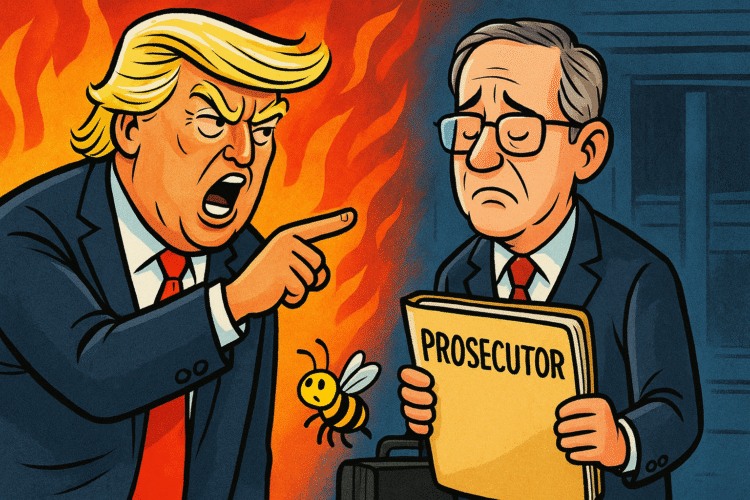
The American legal system prides itself on independence, impartiality, and the quaint notion that prosecutorial decisions are made in courtrooms, not at golf resorts. But on September 19, 2025, Washington delivered another episode of its long-running tragicomedy: Erik Siebert, interim U.S. attorney for the Eastern District of Virginia, resigned. His crime? Not mortgage fraud, not abuse of office, but something far more offensive to the reigning order—telling Donald Trump “no.”
The Players in This Courtroom Drama
- Erik Siebert: An interim U.S. attorney who thought evidence mattered more than presidential moods. Rookie mistake.
- Donald Trump: The man with a public-relations degree in law from the University of Gut Feeling.
- Bill Pulte: FHFA director, hobbyist in turning housing referrals into political vendettas.
- Letitia James and James Comey: Perennial villains of MAGA fan fiction, dangling as trophies on Trump’s wish list.
- ABC News: The unwilling Greek chorus, reporting the White House had already prepped Siebert’s firing papers before he got the hint.
The Timeline of a Forced Exit
- Referral Roulette: Bill Pulte’s Federal Housing Finance Agency (FHFA) handed DOJ a mortgage-fraud referral—a little policy tidbit repackaged as a prosecutorial piñata.
- Siebert’s Analysis: After combing through the case, Siebert reached a radical conclusion: the evidence was weak. That’s lawyer-speak for “no jury will convict, and no prosecutor with a shred of ethics should try.”
- Presidential Whispers Become Roars: Trump began openly criticizing Siebert, noting with disdain that Democrats once supported his nomination. In Trump’s universe, bipartisanship is proof of disloyalty.
- The Ultimatum: By mid-September, ABC News reported that the White House had prepared Siebert’s pink slip. Before Trump could channel his inner The Apprentice (“You’re fired!”), Siebert saved him the theatrics by resigning.
- The Fallout: DOJ independence, already on life support, lost another lung.
The Real Stakes: DOJ Independence
The Department of Justice is supposed to operate at arm’s length from the White House. Presidents appoint attorneys general and U.S. attorneys, yes—but tradition (and a little document called the Constitution) say they don’t meddle in individual charging decisions.
That tradition is now less “bedrock principle” and more “quaint historical artifact.” Trump has made clear he views DOJ as his personal law firm, prosecutors as his private bounty hunters, and cases as episodes in his revenge tour.
When Precedent Becomes a Punchline
The problem isn’t just that Siebert was pressured out. It’s the precedent. If presidents can openly order prosecutors to pursue weak cases against political enemies—or punish them for refusing—it turns the DOJ into a mob family consigliere operation. Forget impartiality. Justice becomes a loyalty test.
This isn’t just an erosion of norms; it’s a cliff dive. Every future U.S. attorney now gets the message: if the evidence is weak but the president wants scalps, you either contort the law or polish your résumé.
Trump’s Defense: The People Want It
In Trump’s telling, Siebert wasn’t following the will of the people. After all, MAGA rallies cheer whenever “Lock Her Up” returns to the set list. Doesn’t that count as probable cause?
But the people aren’t grand jurors. Courts don’t run on applause. Evidence isn’t optional. Except, of course, when it is—if the president decrees it.
The James and Comey Connection
Why did this matter so much to Trump? Because the Siebert office oversaw politically sensitive probes into New York Attorney General Letitia James (architect of Trump’s civil fraud trial) and former FBI Director James Comey (forever guilty of insufficient loyalty).
For Trump, prosecuting these names wasn’t about law—it was about theater. The White House doesn’t want trials, it wants headlines. “DOJ Targets Trump’s Enemies” is the chyron they’ve been chasing since 2016.
Siebert’s refusal to conjure charges out of thin air made him expendable.
The Anatomy of Coercion
Normally, coercion in DOJ affairs is the stuff of whispers: subtle phone calls, hints dropped over golf. This time, it was open-air bullying. Trump told reporters, “I want him out.” Within days, Siebert was gone.
This is not subtlety. This is not nuance. This is a public firing squad for anyone who mistakes their oath as being to the law rather than to the man.
Why It Matters (Even if You’re Not James or Comey)
The chilling effect here isn’t abstract. It filters down. If prosecutors know they’ll be sacked for not bringing shaky charges, guess what? They’ll bring shaky charges. If they know declining a case makes them a target, they’ll decline less often.
The justice system shifts from evidence-driven to politically calibrated. Innocent people get prosecuted. Guilty allies skate free. The scales of justice aren’t just tipped—they’re for sale.
ABC’s Role as Reluctant Cassandra
ABC News deserves a footnote here. Their reporting confirmed the White House had prepped Siebert’s firing before he resigned. This isn’t a rumor—it’s an operational plan.
Think about that: the executive branch was days away from openly firing a U.S. attorney for refusing to prosecute a politically convenient case. We’re not in gray area territory. We’re in neon-lit abuse-of-power land.
Prosecutorial Norms: The Invisible Victims
“Prosecutorial discretion” is the boring legal term that usually keeps politics at bay. It means prosecutors get to weigh evidence, resources, and justice before deciding to file charges. It’s not sexy, but it’s the backbone of fairness.
When presidents strip that away, prosecutors stop being lawyers and start being enforcers. It’s not discretion anymore—it’s obedience. And that’s not the DOJ. That’s the Department of Retribution.
A Glimpse of the Future
Siebert’s resignation is a warning shot. The next U.S. attorney will understand the assignment: find charges or find the door. The next DOJ official who resists will be the next headline.
The endgame isn’t just loyalty; it’s normalization. If prosecutors being strong-armed becomes routine, then independence isn’t eroded—it’s extinct.
Summary of the Siebert Resignation
Erik Siebert, interim U.S. attorney for the Eastern District of Virginia, resigned after Trump told reporters “I want him out,” following months of pressure to bring mortgage-fraud charges from an FHFA referral pushed by Bill Pulte. Siebert concluded the evidence was weak, resisted demands, and became expendable. ABC reported the White House had prepared to fire him, highlighting the coercive atmosphere. Trump criticized Siebert for Democratic support during his nomination, further politicizing the issue. The episode connects directly to politically sensitive probes of Letitia James and James Comey, raising stakes for DOJ independence, prosecutorial discretion, and the precedent of presidents openly meddling in charging decisions. The real danger isn’t just one man’s resignation—it’s the chilling signal to every prosecutor: bend the law, or break your career.