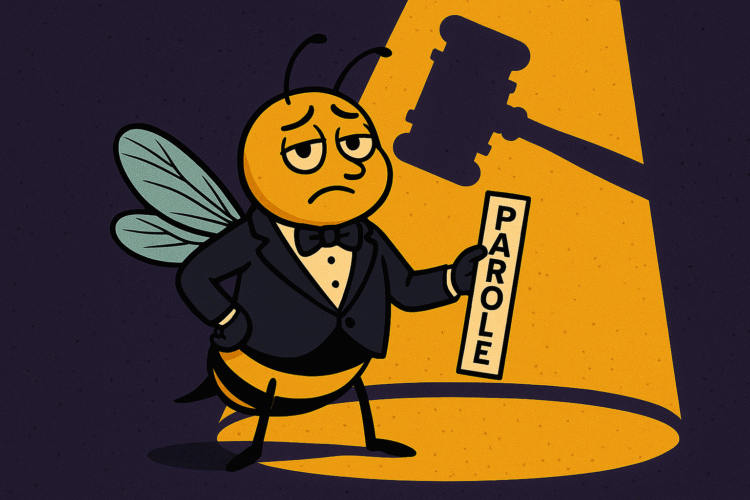
Imagine a system where forgiveness isn’t a simple word but a heavily produced gala—complete with judges, cameras, moral gymnastics, and a giant question mark hovering over your head, blinking like a faulty neon sign. That’s the world of modern parole hearings, and on August 21, 2025, Erik Menendez starred in the latest episode of America’s Redemption Auditions.
After a grueling ten-hour hearing, California’s parole board delivered a three-year denial. The reasons: contraband cell phones, alleged drug smuggling, fights that make you wonder if Iron Maiden and prison yard brawls had a baby, and—most damning of all—insufficient remorse or insight. The board basically looked at Erik, two decades into his sentence for killing his parents in 1989, and said, “You’re not sorry enough to leave. Try again in three years.”
Let’s talk about that. Because what’s enshrined here is not justice; it’s a performance. A tragic remake of American Idol, except nobody sings, and no one gets a record deal. You audition for redemption. You audition for mercy. And you pray the bureaucrats find you worthy.
Part 1: Welcome to the Redemption Show
It’s not called redemption; it’s called a “parole hearing.” But let’s be real—this is theatre with fluorescent lighting and pause-ready sympathy. Erik Menendez, via video link (because even in prison you can’t escape screens), steps onto the virtual stage of Richard J. Donovan Correctional Facility. The board sits before him like judges at a comic book convention: serious, skeptical, and strangely eager to keep the saga going.
Behind them are bulleted timelines of his infractions—cellphone, drugs, fisticuffs—and if prisons handed out Red Ribbon Week ribbons instead of denials, he’d have a sash by now. Defense lawyers cite his youthful age at the time of the crime, new sentencing laws that allow parole eligibility, and a terminally ill aunt asking for closure. But the board? Their checklist isn’t “Are you sorry?” The checklist is “Are you boring enough, quiet enough, compliant enough?”
And if you’re not, they’ll schedule the next season for 2028.
Part 2: Bureaucracy Stronger Than Guilt
Here’s where it gets deliciously absurd. Erik was resentenced in May to 50-to-life, which mathematically makes him eligible for parole—once he hits age 50. But landing eligibility isn’t mercy—it’s the starting line. After he uttered the magic words (“I’m sorry,” “I’ve changed,” “I feel remorse”), the chief legal crunchers at the parole board will lift their pencils and scribble formal advice. Then Governor Newsom, who may be doing anything from signing bills to choosing avocado suppliers, will have to… well, parolize him.
This layering makes parole determinations feel like a bureaucratic onion, with each peel releasing enough pungent paperwork to make a paper mill blush. Mercy isn’t granted—it’s tributed. You must pay in documentation, throat-clears, implied promises, and familial dramas. Want freedom? First pass the background check, then the compliance audition, then the gubernatorial nod. It’s redemption as a bureaucratic obstacle course.
Part 3: Fight or Phone, the Contraband Classics
Contraband cellphones and drug smuggling are the top-line sins. To the board, a cell phone is less of a communication device and more of a jailhouse swiss army knife—Instagram, conspiracy call chain, evidence bootloader. It shows the inmate isn’t playing by the grid. A fight? A sign of poor impulse control. Drugs? Well, that means rehabilitation is a farce.
On the flip side, Lyle Menendez—Erik’s brother and co-offender—has his hearing coming up. His audition will likely be identical in structure: “Are you repentant? Are you rule-abiding? Are you not beating people with a tray?” If he can say yes, he gets a ticket back to the outside.
This is what late-stage sorry looks like: “I have been good-ish. I refrain from felonies, aside from my original ones. I respect the vending machine, but the vendors of freedom remain behind these walls.”
Part 4: Tabloid Infamy Meets Parole Politics
This isn’t just a parole hearing. It’s a Clash of Eras. The Menendez Murders were tabloid gold—ATI (All That Incest), murder ballads on Jerry Springer, and talk shows calling them “the most hated teens in America.” Now, decades later, we’re discussing whether Erik can say sorry enough to overcome an entire network of TV producers gleefully reliving the trauma.
Nowadays, when parole boards meet, they refer to insufficient insight as the problem. Not “fucked up beyond redemption,” but “you haven’t convinced us your brain is aligned with the moral timeline.” It’s like the jury said you were guilty, sentencing said you were done, but redemption is on indefinite hold until you acquire a moral-season pass.
Meanwhile, your aunt can’t visit; the cameras can’t. Your confession is publicly aired, but your remorse must remain private, muffled by institutional decorum. We’re checking boxes in the open, but the human heart is behind iron doors.
Part 5: The Irony of Justice
Here’s what is heart-stoppingly ironic: the Menendez brothers grew up in privilege. Hollywood-brat wealth. Expensive lawyers. Private schools. Now, decades later, they’re poor in the one thing money can’t buy: mercy. A pop-cultural cautionary tale to generations that watched impulses get filmed on camcorders. When social media brought fame to cruelty, freedom to predators, the tabloids cheered. Now the institutions measure that cruelty with spreadsheets and forbearance quotas.
The men sit behind bars because they committed murder, yes—but also because the world never forgave them, and the system is happy to keep the story going. Every hearing becomes another season. Every denial is a rerun.
Part 6: Redemption Isn’t a Broadcast Event
What if the system asked: “Do we actually believe in rehabilitation?” Instead of: “Can we risk an inmate having a Monday morning release flub and wind up with a date on Fox & Friends?” The difference between these questions is stark. One asks: “Have you changed?” The other asks: “Can you keep quiet and stay out of trouble until we forget what you did?”
Parole shouldn’t be talent screening. It should be trust re-earned. But our system treats trust like a hostage. You get it slowly, in installments, after failing every temperature check.
Part 7: A Tale of Two Brothers… Who Never Shared a Blessing
When Lyle’s hearing comes, the structure will be identical. The board will assess his infractions, conduct, and remorse. But imagine the contrast: the same sentencing regime applied to different personalities. One brother gets a three-year nod to audition again. The other may get five years, ten, or—if popularity on talk shows has any correlation with parole—maybe never.
It’s like Kumbaya Camp for killers. Sit still, behave, audition in perp-walk lighting, and hope the judges are in a good mood.
Part 8: The Queer Bee Closing Sting
So where does the bee punch in? In the reporter’s voice that says, “He got a 3-year denial because he owned a cellphone.” That’s the absurdity. The innocence of oversight becomes disqualification. The system dings you for living—just for texting your lease renewal or checking what time the shift ends.
Erik Menendez is not redeemable because he broke too many rules, and also because he was too visible. Audible, inscrutable, but never invisible. Where grace is measured by distance. Where guilt is eternal—even in life sentences with soft edges.
This isn’t justice. It’s redemption theater. And the admission price is your soul.