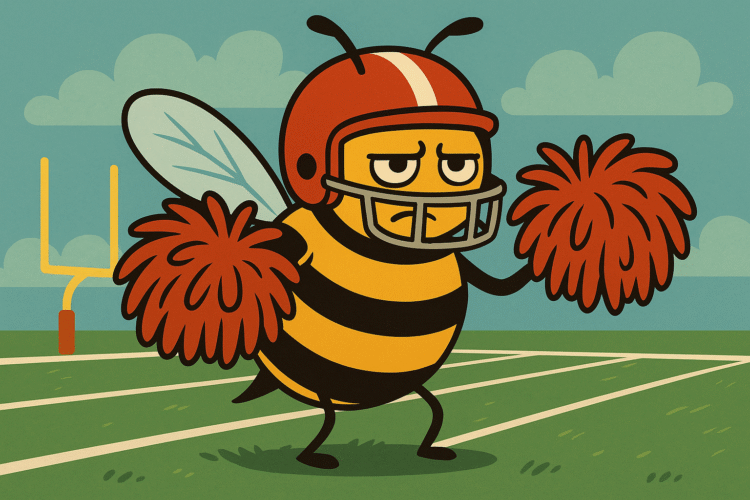
It’s 2025, and the NFL has finally decided that maybe, just maybe, a man in sequins yelling “Defense!” won’t unravel the fabric of Western civilization. Twelve teams—including the Vikings and Patriots—are adding male cheerleaders to their squads this season. A gesture toward gender equality, sure, but also, apparently, a trigger for every uncle in America who thinks the Bud Light boycott didn’t go far enough.
You’d think the league announced they were replacing touchdowns with drag brunches. The backlash has been that sharp, that swift, and that utterly predictable. “It’s an attack on tradition!” cry the same fans who spent the last decade defending concussion cover-ups and domestic violence scandals as just part of “the game.” Tradition, it seems, isn’t about protecting players—it’s about protecting fragile masculinity from the sight of a man with a high kick.
And yet, irony alert: cheerleading began as a men’s sport. In the late 19th and early 20th centuries, it was men—rowdy, barrel-chested, rah-rah types—who led the cheers. Ronald Reagan? Male cheerleader. George W. Bush? Male cheerleader. Both presidents, both men who loved waving pompoms before they waved executive power. If we’re talking tradition, male cheerleaders are the tradition. What’s happened since then isn’t progress—it’s a century-long gender bait-and-switch where cheerleading was feminized to make men comfortable watching women jump and stretch, while forgetting the whole thing was built by guys who looked like future Presidents flipping megaphones.
But in Trump’s America, history doesn’t matter. Facts don’t matter. What matters is the fantasy that football must remain the last untouched sanctuary of hetero swagger—beer, wings, yelling “bro,” and pretending that Tom Brady didn’t spend half his career in Uggs.
When Equality Meets End Zones
The NFL’s inclusion of men on cheer squads isn’t about erasing women. It isn’t about neutering the sidelines. It’s about balance: acknowledging that athleticism, performance, and spirit aren’t gender-specific. But try telling that to the comment sections, where the narrative is less “progress” and more “they’re shoving this down our throats!”
Pause there. Because no one complains about being force-fed yet another all-male booth of ex-linebackers droning about zone coverage for four straight hours. But show a man in rhinestones? Suddenly it’s tyranny.
Joy Taylor, one of the few sane sports analysts left, called it what it is: progress. Football, she noted, should reflect the diversity of its fan base, not just the straightest, loudest slice of it. And she’s right. Stadiums aren’t filled solely with Marlboro Men. They’re filled with women, with queer fans, with families, with people who understand that the world outside doesn’t stop existing at kickoff.
Trump’s America: Saying the Quiet Part Out Loud
The outrage isn’t really about football—it’s about permission. Trump’s America gave people permission to say what they used to keep inside. Permission to scream that “gay” is an insult, to rail against anything remotely inclusive as “woke,” to call progress “perversion” without shame.
The male cheerleader panic is a microcosm of this: it’s not a sports debate, it’s a cultural litmus test. You’re not just arguing about who waves pompoms—you’re declaring whether you think queerness belongs in public, period.
And so the “quiet part” gets said out loud: “We don’t want to see that.” Which translates, of course, to “We don’t want to see you.” Not on the field, not on TV, not in America.
History Has Receipts—Even in Pompons
The funniest part? The history lesson no one wants. Cheerleading started as a male pursuit in 1898 when Johnny Campbell of the University of Minnesota picked up a megaphone and yelled a cheer. It was men—athletes, often football players themselves—who dominated the role well into the early 20th century.
By the 1920s and 30s, men were still the majority. Even into the 1940s, college squads were overwhelmingly male. Only post–World War II, when women filled the spots left vacant by drafted men, did cheerleading start to feminize. By the 1970s, pop culture had fully locked it into the “short skirts and pompons” image we know today.
So when fans clutch their pearls over “men invading cheerleading,” they’re really protesting a return to origins. Reagan high-kicked on the sidelines. Bush waved spirit fingers. Male cheerleaders are not radical—they’re retro.
The Boycott That Wasn’t
Of course, social media is aflame with boycotts. “I’ll never watch football again!” declare people who still tuned in during kneeling protests, labor strikes, and the absolute dumpster fire of the Washington Commanders’ sexual harassment scandals. The selective outrage is exhausting.
They’ll swear off the NFL over a guy doing a split, but not over owners funneling hush money to cover up abuse. They’ll call a pyramid lift an “attack on masculinity,” but not blink when star players are charged with assault. It’s less about morality and more about the hierarchy of what kind of “immorality” they can tolerate. Spoiler: queer joy ranks higher on their sin list than actual violence.
The Bro Problem
At the core of this panic is the “bro problem”: the conviction that football is the last straight male preserve. Everything else—film, fashion, politics, even beer ads—has gone “woke.” The field, in their mind, is the fortress. But fortresses fall.
The presence of male cheerleaders isn’t an erasure of women. It’s not a rainbow parade across the 50-yard line. It’s a mirror, reflecting back a truth America keeps trying to dodge: masculinity doesn’t have to be fragile. You can root for your team, crush a beer, and still clap when a guy does a flawless back tuck.
Why This Matters
This isn’t about sideline aesthetics. It’s about visibility. For every queer kid watching, every young man who loves dance, every fan who never saw themselves in the gridiron spectacle, this matters. It says you don’t have to shrink to fit the box America built for you.
Which, incidentally, is exactly why it enrages the homophobes. Visibility is the one thing they can’t fight with statistics. It’s harder to erase someone once they’re standing in the end zone, pompon in hand, staring down the crowd that said they didn’t belong.
Tradition or Transformation?
So let’s end on this: tradition is a slippery thing. Tradition said women couldn’t vote. Tradition said segregation was law. Tradition said men were the cheerleaders until it didn’t.
Football is often described as a “battle of wills.” Maybe this is just another battle—between a will to include and a will to exclude. Between those who want their Sundays to reflect reality, and those who want their Sundays to be a curated fantasy where everyone looks like them, cheers like them, loves like them.
But history has receipts. Reagan and Bush waved pompoms before they waved policy. Cheerleading was male before it was female. And football has always been queer whether America admitted it or not.
So let the men cheer. Let the sidelines sparkle. Let tradition evolve. If masculinity can’t handle a cartwheel, maybe it wasn’t that tough to begin with.