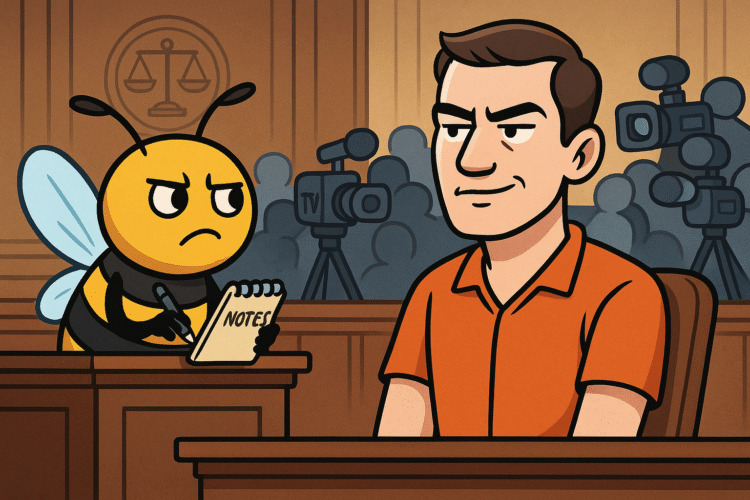
Well, justice has been served—lukewarm, over-syndicated, and with a familiar aftertaste of televised grief. Bryan Kohberger, the man who believed criminology was a personality type, has officially been sentenced to life without parole for the brutal murders of four Idaho college students. And somewhere in America, a Netflix producer just got a second wind.
The sentencing brought everything you’d expect from a modern courtroom drama: tearful families, a blank-faced killer, and reporters describing him as “stoic,” which is code for “sociopath with posture.”
Kohberger, in his now-patented blend of smug and sedated, said almost nothing as victims’ families read statements drenched in rage, pain, and the kind of clarity that years of waiting can sharpen into a scalpel.
He blinked. He nodded. He sat.
Justice, apparently, also sits.
From PhD to Life Sentence: The Bryan Kohberger Journey™
Let’s back up. Kohberger was studying criminology, which now feels a bit like taking a masterclass in CPR just to perfect your own drowning. The man was obsessed with the mechanics of murder, possibly because he thought he’d be better at it than the rest of us amateurs. Spoiler: he wasn’t.
He left DNA, his car, and his cell phone tower footprint like a breadcrumb trail of hubris. It’s giving: “I watched one season of Mindhunter and now I’m ready to be the Zodiac.”
At the time of his arrest, he was described as “quiet, intense, and intelligent.” Ah yes, the holy trinity of white male true crime protagonists.
The Families: Heroes Without a Platform Deal
If this story had any soul left in it, it came from the families of the victims—who stood, trembling but unwavering, and told Kohberger exactly what he stole from them. Time. Laughter. Weddings. Graduations. Futures.
Their grief wasn’t polished. It wasn’t scripted. It was raw, messy, and terrifyingly human—everything he tried to erase.
And as they spoke, Kohberger stared ahead like he was trying to calculate how many minutes of Dateline footage this would earn him.
America’s Favorite Genre: Murder-as-Content
As police reports continue to trickle out—redacted, unredacted, leaked, and TikTok-analyzed—we’re reminded that in 2025, no tragedy is complete without a content pipeline.
There are already podcasts. YouTube reenactments. Instagram reels with somber piano music. Influencers offering “healing crystals for victims’ energy.” The justice system may operate at a crawl, but the algorithm? The algorithm sprints.
Somewhere, an audiobook narrator is rehearsing Kohberger’s grocery list in a gravely voice.
Somewhere, a reenactment actor is Googling “how to look dead behind the eyes.”
We’ve officially entered the Truman Show era of true crime: justice is no longer something we wait for—it’s something we binge.
What Happens Now?
Kohberger will spend the rest of his life behind bars, which is more mercy than he offered his victims. He will age into obscurity, or worse, into infamy—his name destined to sit atop Reddit threads and bookshelf titles in the “Criminal Psychology” section of your local Barnes & Noble.
The victims’ families will be left with nothing but the ghosts of what could have been—and a revolving door of media requests they never asked for.
And the rest of us? We’ll move on to the next tragedy. The next trial. The next man who thought murder was a thesis topic.
Because in America, justice might be blind—but true crime always gets good lighting.