A Sunday service turned into a nightmare. In Grand Blanc Township, Michigan, a man drove a pickup into a Mormon chapel, sprung open fire with a rifle mid-worship, doused the building with gasoline, and watched as flame and lead collided. The local police rushed in. Within minutes he was dead. The dead and wounded, survivors and ashes—this was carnage in a house of faith.
The man is Thomas Jacob Sanford, a former Marine. He rammed the entrance, then set the place ablaze. He fired through Sunday crowds. The building burned. Four worshippers were confirmed dead. Eight more were injured (some by gunfire, others by smoke). The fire devoured the chapel’s interior; first responders scrambled to contain both the blaze and the bodies. Investigators swarmed, bomb squads and ATF joined. The FBI Detroit field office took over motive search. The media framed a question mark: who did this, and why?
Public records reveal a Trump yard sign at his home, old family photos in “Re-elect Trump 2020” shirts, and reports that Sanford had once called Mormonism “the antichrist.” He didn’t register with any political party—voting records show no formal affiliation—but signatures on conservative petitions and his public posture suggest alignment. Not proof. But enough to raise the question: when the bomber is MAGA, does the national narrative flip to denial?
Minute by Minute: The Furnace of Terror
It began close to Sunday worship time. A 911 call came in: a truck crashing through the front doors, then gunshots echoing inside. First officers arrived in a matter of moments—some accounts say within 30 seconds to a minute. They encountered burning, smoke, chaos.
Sanford exited the vehicle, rifle in hand, firing at worshippers. The fire was already creeping across wooden pews and hymnbooks. The blaze consumed carpets, hymnals, altars, drapes. Police returned fire. A shootout. Sanford fell. The building’s interior became a furnace. ATF agents combed for bombs or incendiary devices. Bomb-squad teams swept the perimeter. Firefighters contended with structural collapse.
In the aftermath, investigators found signs of accelerant, empty gasoline containers, and suspicious devices. They traced digital footprints, cell phones, social media, family photos, yard signs. They secured Sanford’s home, his vehicle, his devices. They interviewed eyewitnesses, survivors, neighbors. Investigators were piecing together both motive and method, while the country watched.
The Reacting Parties: Silence, Outrage, Denial
From the pulpit to the platform, reactions followed fault lines. Faith leaders decried violence. Civil-rights advocates warned of extremist alignment. Residents wept. Local authorities condemned the act as evil, said law enforcement would follow evidence where it leads.
But at the same time, the usual machinery began grinding in the shadow: conservative media voices framed it as “yet another attack on Christians”—as if the identity of the shooter were irrelevant. Some whispers floated the universal “mental health” cover. Others pivoted: “Don’t politicize tragedy.” The message: don’t look too hard at the roots.
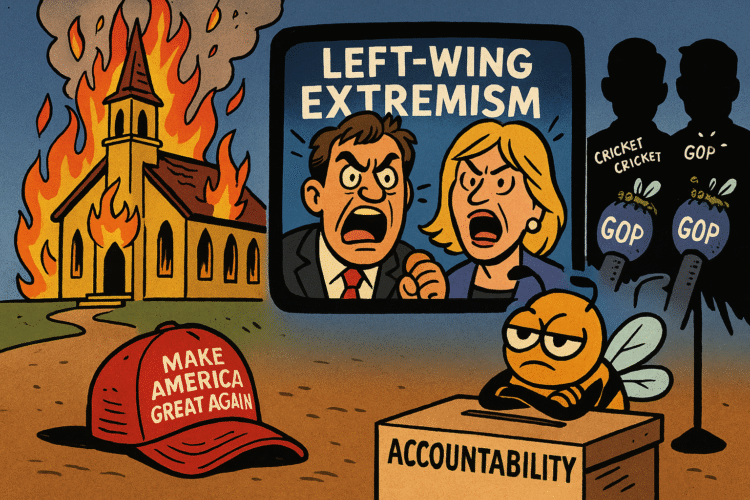
Noticeably absent was the belligerent moral clarity that once rang after other killings with right-wing roots. The Trump administration, which once rushed to paint “left extremist violence” after the Charlie Kirk assassination attempt, said far less this time. No congressional floor show, no executive speeches about extremism in “our own ranks.” Crickets.
The Broader Pattern: When the Cameras Don’t See Right-Wing Violence
Look back at the Charlie Kirk shooting. The narrative spun: left-wing rage, anarchism. But the facts told another story: the shooter was steeped in right-wing grievance, raised amid MAGA talking points and violence-laced rhetoric. Still, the outrage machine pivoted left. The playbook: blame the enemy, not the home team.
In this Michigan case, weapons, fire, targeted killing at a faith site—terror hallmarks. Yet the right-wing affiliation of the attacker becomes a muddy footnote. The conservative response model is rehearsed: deny, deflect, depoliticize, reset. That’s how violence in their ranks escapes conversation.
If we were rational, we’d see the pattern: most ideological mass shooters or terror acts in America are not left-wing unicorns. They are drawn from the resentments, the prophesize-fevered parlance, the protective sanctimony of the right-wing media ecosystem. Yet that reality is starved of acknowledgment. Why?
Should MAGA Be Labelled a Terrorist Organization?
Ask yourself: by the usual legal test, what is terrorism? Violence or threat intended to intimidate or influence a population for political ends. If that’s the standard, then MAGA (not the hat, the movement) is an ideological incubator for more terrorist acts than many formally designated groups. The resources, funding, media amplifiers, radicalization pathways—it all fits.
And yet, the shield remains: “It’s not an organization, it’s a political movement.” That shield allows ideological violence to act without consequence. The church bomber in Michigan had his MAGA paraphernalia. The Charlie Kirk shooter had his MAGA upbringing. But we do not interrogate the umbrella. Instead, we treat each incident as a lone scream, not the echo of a movement.
Community, Church, Fear, and Memory
The community left a chapel in ruins. Ash, charred beams, embers, broken windows, bloodstains. Families lost beloved members. Children and elders wounded. The sanctuary became horror’s theater. Recovery will be more than rebuilding timber; it will be reclaiming faith, restoring trust, redefining whether people can gather without terror.
The LDS congregation faces trauma: a religious space, a place of refuge, turned into a kill zone. How do worshippers return? How does the church reassure its people? What security posture becomes acceptable? Who guards the guards?
Meanwhile, the political framing war has begun. Some will argue: this is persecution of Christians. Some will say: it’s isolated mental illness. Some will call for gun control. Others will want louder condemnation of extremism in all its forms. But unless the right-wing vectors are named, nothing changes.
Why the Silence Matters
When violence trafficked in right-wing grievance is met with silence, history writes itself: the ideology is legit. The grievances remain unchallenged. The next bomber reads the same pamphlet, listens to the same propaganda, and hears no counterweight in national leadership. Silence becomes complicity.
If the killer wears MAGA, then the movement shares culpability—not in criminal guilt, but in enabling context. The calls for “stop politicizing violence” ring hollow when we only politicize it when it’s convenient. The moral test of leadership is not just how you respond to your opponent’s extremism—but how you respond to your own.
Final Thought
The Michigan church bomber is being processed in evidence rooms and crime labs. But we should also process this moment in narrative labs. Because when extremism in right-wing identity is met with crickets, you train next believers to be louder, more violent, more insistent. You teach them terror costs silence, not consequences.
So let’s name what this is: theological hatred, political extremism, ideological violence. Let’s refuse the normalizing cover of mental illness or “isolated tragedy.” Let’s demand accountability—not just of a man, but of a movement. Because until we treat MAGA violence with the same moral urgency we reserve for the left, churches will keep burning, bullets will keep falling, and the conspiracy of silence will remain the deadliest ideology.