On September 2, 2025, Jimmy Kimmel returned from a two-month vacation and delivered a monologue so sharp you could butter your toast with it. He didn’t just dip into politics. He torched the President of the United States with the glee of a man who’d been storing up insults in a Notes app all summer.
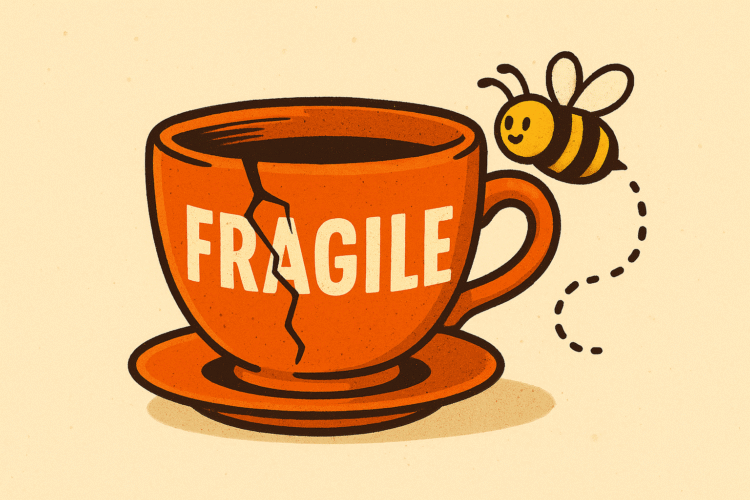
The target was President Trump, who had been busy being himself—sprinkling health rumors like confetti, showing up with bruised hands and wobbly ankles, holding sycophantic White House meetings, lobbying for a Nobel Prize, fantasizing about hosting a UFC bout on the South Lawn. All of it, in Kimmel’s telling, was less statesman and more sideshow. The climax came when Kimmel branded Trump a “delicate, chubby little teacup”—mocking the right’s endless screeds against cancel culture by asking, “I thought you were against cancel culture?”
It was one of those rare late-night moments that wasn’t just comedy. It was commentary in the sharpest, most ridiculous form: satire dressed in a monologue suit, reminding us why late-night still matters—because it can still needle the powerful in real time.
The Rumor Presidency
Trump has always been both the author and subject of rumors, but his latest season of power has leaned heavily on the “Is He Alive?” arc. The bruised hand. The unsteady walk. The whispers of strokes, falls, secret hospital visits. A presidency conducted like an episode of Unsolved Mysteries.
Kimmel treated the rumors like the farce they are: if you’re the most visible man on earth, and the biggest speculation is whether you’ve tipped over, you’ve already lost the narrative. A White House that once prided itself on “controlling the optics” now has the optics of a late-night punchline.
The Nobel Hustle
Lobbying for a Nobel Prize is peak Trump. It’s the equivalent of showing up at the Oscars with a pre-written acceptance speech despite not being nominated. Kimmel skewered this perfectly: a president so desperate for validation he’ll chase global accolades the way toddlers chase stickers.
In a country where wages are flat, storms are rising, and healthcare is a roulette wheel, our leader is busy submitting his resume to Oslo. Kimmel didn’t need to stretch for the joke—the absurdity was already gift-wrapped.
The UFC Presidency
Then came the fantasy of a UFC bout at the White House. Nothing says “leader of the free world” like turning 1600 Pennsylvania Avenue into Madison Square Garden with worse lighting. Trump imagines himself the impresario of blood sport, standing between two fighters like a carnival barker. Kimmel rightly mocked it as the collision of governance and gladiator spectacle.
The joke here isn’t subtle: the man who once peddled steaks and universities now wants to peddle cage matches from the Rose Garden. America’s democracy, reduced to pay-per-view.
The White House as Stage Prop
Kimmel’s parody of a sycophantic White House meeting hit harder than most cable news segments. The image of aides nodding like dashboard bobbleheads while Trump rants about his ankle swelling isn’t satire. It’s documentary footage waiting for a laugh track.
The brilliance of late-night is how it collapses the absurd and the actual. By the time Kimmel finished his monologue, it was impossible to tell where parody ended and press pool transcripts began.
Colbert’s Ghost
Kimmel also took time to jab CBS over the cancellation of Stephen Colbert, a reminder that late-night itself is shrinking. The genre that once shaped presidencies has become expendable in the age of TikTok outrage. But Kimmel’s monologue doubled as proof of concept: this is why you need late-night. Not because monologues change votes, but because they puncture delusion. They keep the emperor’s ankles visible, bruises and all.
When CBS dropped Colbert, it wasn’t just a business decision. It was a silencing of one of the few remaining megaphones willing to mock the absurd in real time. Kimmel knows this, which is why he keeps reminding audiences that satire isn’t just entertainment—it’s resistance with better lighting.
Cancel Culture, Meet the Teacup
The high point, of course, was Kimmel’s skewering of the right’s endless campaign against “cancel culture.” For years, conservatives have declared themselves victims of a censorious culture that silences them. Yet here’s Trump—thin-skinned, grievance-soaked, quick to muzzle anyone who isn’t applauding—revealed as the ultimate censor.
By branding him a “delicate, chubby little teacup,” Kimmel distilled the contradiction: the man who rails against cancel culture cannot survive without it. He demands censorship of critics, blacklists of rivals, exile of disloyal aides. Cancel culture isn’t his enemy. It’s his governing philosophy.
The Function of Mockery
What Kimmel understands—and what makes his monologue resonate—is that mockery is not trivial. Mockery reveals fragility. Leaders who can withstand it tend to survive history. Leaders who can’t collapse under its weight.
Trump has always treated humor as a mortal threat. He can dish it, but he cannot absorb it. That’s why satire matters: it exposes the teacup beneath the bravado. You can survive scandals, impeachments, even indictments. But mockery? Mockery follows you.
The Summer of Stunts
Kimmel ticked through Trump’s summer stunts like a carnival barker reading off cheap attractions: Nobel lobbying, UFC fantasies, phantom health scares. The through line was clear: this is not a presidency. This is vaudeville in decline. The jokes are recycled. The audience is restless. The star is bruised, literally and metaphorically.
And yet, the danger is real. A vaudeville presidency still signs laws. A chubby teacup can still hold scalding liquid. That’s why Kimmel’s torching felt less like entertainment and more like a public service.
The Haunting Close
On September 2, 2025, Jimmy Kimmel reminded us that satire is not decoration. It’s not a sideshow. It’s one of the last public loudspeakers capable of puncturing delusion in real time.
The haunting truth is this: America has reached a point where late-night comedians are doing the work our institutions won’t. They point to the bruised hand, the wobbly ankles, the sycophantic meetings, the UFC fantasies, and they call them what they are—absurdities unworthy of silence.
We may laugh, but the laughter is laced with dread. Because beneath the punchlines, the country is still being governed by a man whose ego is as fragile as porcelain, and whose power is anything but.
And that’s why the image sticks: a president, a stage, a nation caught between spectacle and survival—while a late-night host calls him exactly what he is: a delicate, chubby little teacup rattling on the saucer of American history.