Amazon Author Page | Read If Love Were Enough

How do you stay in love with someone who is no longer close enough to touch—but still close enough to haunt every version of your day?
If Love Were Enough isn’t about a breakup. It’s about that slow, aching fade before the breakup. The quiet corrosion of closeness. The texts that go unanswered, not out of anger, but exhaustion. The kind of grief that doesn’t come with a funeral—just a morning where you realize you’re waking up alone, even when someone’s name is still saved in your phone.
Why I Wrote If Love Were Enough
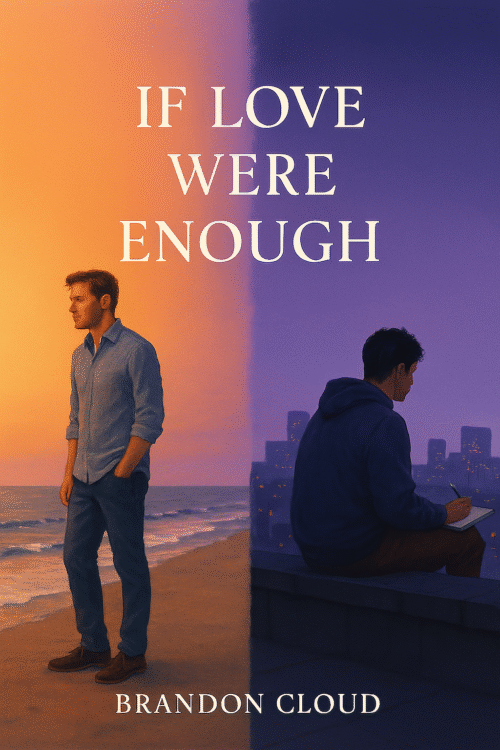
I wrote this book for anyone who’s ever held on too long. Who believed the plane tickets, the FaceTimes, the long-distance rituals would somehow be enough to bridge a silence growing louder by the day.
Grant is in Austin. Shawn is in Galveston. Five years in, they’re still together—but barely. And that’s the part no one talks about: the ghost of a relationship still technically alive. No final fight. No third party. Just missed calls, mismatched calendars, and two people drifting, quietly and inevitably.
“There’s no villain here. Just two people slowly forgetting how to say I love you out loud.”
What I wanted to explore wasn’t infidelity or betrayal—it was emotional erosion. How relationships die in the quiet. How you can love someone fully and still lose them to routine, fatigue, or the slow suffocation of being apart for too long.
The Anatomy of Distance
Distance is never just geography. It’s time zones. It’s bad Wi-Fi. It’s birthdays celebrated on mute and arguments paused mid-buffer. Long-distance relationships ask you to be constantly present for someone who is always partially gone.
In If Love Were Enough, that tension plays out not in dramatic fights but in small failures of connection. A voicemail never played. A weekend rescheduled for the third time. The creeping suspicion that your partner’s silence has more to say than their words ever did.
“He didn’t say ‘I’m fine’ like it was a lie. He said it like it was all he had energy left to offer.”
Shawn is tired. Grant is trying. Neither is wrong. But effort isn’t always enough—especially when it’s being mailed across the state in care packages, guilt, and mismatched expectations.
Why It Matters to Tell These Stories
Most love stories end at the reunion. The airport run. The kiss in the rain. But If Love Were Enough asks: what happens when the couple doesn’t reunite? When love is there, but the logistics of life, career, trauma, and distance keep pulling the ground out from under them?
“Love didn’t feel like enough anymore. It felt like a debt they both kept trying to pay with apologies.”
Queer or straight, all long-distance couples know this struggle. But for queer relationships especially—already made fragile by societal pressures, unsupportive families, and past trauma—distance can feel doubly cruel. When love is already under siege, geography shouldn’t be the final nail.
That’s why this story matters. It doesn’t dramatize queer love. It humanizes it. It gives us space to be ordinary—flawed, messy, exhausted, and trying our best from different cities.
When Love Isn’t the Problem—Proximity Is
One of the hardest lessons in any relationship is realizing that love doesn’t always come with the infrastructure to sustain it. You can adore someone and still grow apart. You can want them, miss them, dream about them, and still feel like strangers when they finally visit.
“He kissed him like he was trying to remember what it used to feel like. Like muscle memory failing mid-motion.”
I wanted this novel to be a mirror. Not just for the lonely or the left behind, but for the people trying. The ones coordinating work schedules and emotional needs and monthly travel—and still feeling like it might not be enough.
How If Love Were Enough Holds Space for Real Love
Real love doesn’t always look like connection. Sometimes it looks like trying, even when it’s doomed. Sometimes it’s the heartbreak of knowing you’re both doing your best—and it’s still falling apart. This book isn’t about bitterness. It’s about honesty. Tender, gut-wrenching, emotionally intelligent honesty.
“They never stopped loving each other. They just stopped fitting inside the same future.”
There are no villains in this story. Just two men, five years in, asking themselves the hardest question: Is this still working?
Final Thought:
If Love Were Enough is not a tragedy. It’s a reckoning. With distance. With expectations. With the lie we tell ourselves that love is always enough. Sometimes, the kindest thing you can do is let go—not because you stopped loving them, but because you finally started loving yourself.