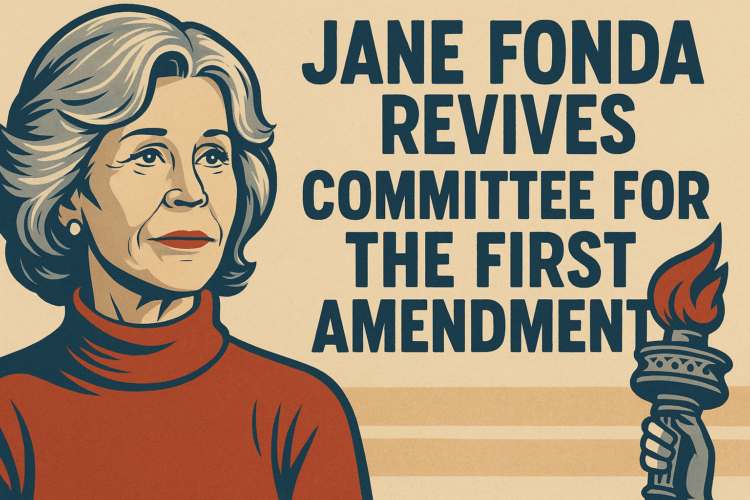
The ghosts of the blacklist just got company. On October 1, 2025, Jane Fonda—the 87-year-old icon, activist, and daughter of Henry Fonda—took the stage again not to accept awards, but to launch a new front in a culture war over dissent. She resurrected the Committee for the First Amendment, originally conceived in 1947 to fight McCarthyism, this time with more than 550 signatories from film, TV, music, and theater in tow—Billie Eilish, Viola Davis, Pedro Pascal, Julia Louis-Dreyfus, Spike Lee, Barbra Streisand, Aaron Sorkin, Gracie Abrams among them. Their declaration: the federal government is again pressuring media, academia, and the arts, and the time for cross-partisan resistance is now.
This is not merely nostalgia. It’s a warning. Let me walk you through how the old committee died, how the modern one was pushed into existence, what it demands, how the system responded, and what’s at stake when artists dare to become watchdogs again.
From the Red Scare to Today: The Committee’s Long Shadow
In the winter of 1947, Hollywood trembled under Joseph McCarthy’s rising shadow. The House Un-American Activities Committee (HUAC) subpoenaed writers, actors, directors—pressured them to confess political leanings, name others, or suffer blacklisting. A handful of studios and stars formed the original Committee for the First Amendment, including Henry Fonda, Lucille Ball, Humphrey Bogart, Lauren Bacall, Gene Kelly, Frank Sinatra. Their 1947 radio address proclaimed their opposition to censorship, their support for free expression.
But the public turned on them. Some committee members faced retaliation, accusations of naiveté, guilt by association. Within months, the committee’s influence waned, internal fractures emerged, and many members backpedaled. The blacklist became an open wound for decades afterward, and Hollywood swore it would never again walk blind.
Yet history, as it often does, invites repetition. The forces that once demanded ideological conformity in red screens now demand silence through institutional pressure, regulatory threat, and media intimidation.
The Catalyst Chain: Why 2025 Needed This
The spark came from multiple corners, converging this September:
- Public-media pressure fights: Republicans and some in the White House have long attacked public media funding—especially NPR and PBS—as ideological tax waste. These fights intensified.
- Jimmy Kimmel’s suspension: In late September, ABC/Disney suspended Jimmy Kimmel Live! after Kimmel’s monologue about assassination, following pressure from FCC Chair Brendan Carr. The removal was publicly framed as editorial choice—but insiders saw signals of censorship and coercion over networks and affiliates.
- Threats to dissenting artists: In recent months, political appointees and conservative commentators have floated revoking licenses, regulatory probes, tax audits, and media blackballing for artists who criticize power.
- The cumulative effect: an atmosphere in which artists and institutions wonder whether criticism is a form of treason—or at least career suicide. Jane Fonda looked around and said, “I’ve seen this movie. It ends badly. Let’s cut to the part where we fight back.”
So she issued an open letter, rebranding the committee, invoking the past’s rising darkness, insisting that artists have a constitutional responsibility as cultural guardians, not just entertainers.
Structure, Demands, and the Anatomy of the New Committee
The relaunched Committee for the First Amendment is not a PR stunt but a scaffold of organized resistance. Its features:
- Open letter: the foundational document, invoking history, naming threats, demanding solidarity across the aisle.
- Signatories commitment: each signer pledges not to rep silence, to oppose censorship, to stand for creative freedom regardless of content.
- Legal defense fund: the committee will raise and direct resources to defend artists and outlets facing government coercion, takedown demands, or retaliatory investigations.
- Platform neutrality pledges: signatories and institutional participants agree to demand transparency when platforms remove work due to government pressure.
- Requests for disclosure: the committee demands data about government-influenced takedowns, requests for suppression, internal memos on regulatory enforcement, and a public register of the government’s “soft demands” on media and culture.
- Solidarity guarantees: signers pledge to support artists under threat, to lobby studios that refuse to contract censorship, and to create “safe harbor” for dissenters within creative networks.
The rollout was swift. On day one, press releases, social media threads, celebrity interviews, op-eds, and studio emails flooded the ecosystem. The momentum was built not in months but hours.
How Hollywood Reacted (and Hesitated)
- Studios and networks: many hedged. Some issued statements affirming artistic freedom; others stayed silent, citing contracts, business risk, or “creative neutrality.” In hallways, executives whispered about pressure from federal regulators or licensing bodies.
- Guilds: SAG-AFTRA, the Writers Guild, the Directors Guild offered cautious support. But unions know the risks: invoking political controversy invites IRS audits, contract renegotiations, and regulatory retaliation.
- Civil-liberties groups: the ACLU, PEN America, Freedom of the Press Foundation all praised the move. Lawyers began drafting amicus briefs, prepared litigation strategies around media coercion, platform suppression, and executive overreach.
- The White House: expectedly, sharp pushback. “This is a political stunt masquerading as cultural resistance,” said a spokesperson. “We support free speech—but media bias is real, and we will not tolerate networks that refuse to face accountability.” The administration’s playbooks began murmuring “cancel culture for cancel culture.”
The early salvoes illustrate the risk: to support the committee is to wager one’s career, public brand, and sometimes safety. But to refuse is to acquiesce.
Why This Today Matters
This is not nostalgia. It’s a battleground. The stakes:
Blacklist-era lessons apply
If the government uses licensing, tax audits, subsidies, regulation, or funding cuts to reward obedience and punish dissent, the modern reprisal may not lock actors in prison—but it can deplatform them. If artists must fear regulatory retaliation, the chilling effect replaces the bullet.
Funding lever becomes censorship tool
Public media funding, tax credits, loans, subsidy programs—all become pressure points. Remove funding, demand neutrality, coerce self-censorship. Create a dependency, then pull the lever when criticism surfaces.
Amplification suppression is censorship
If broadcast networks or streaming platforms demote or delist artists under pressure, the speech is still suppressed. A “platform demotion” is the modern blacklist. The committee is challenging not only censorship but suppression by algorithm, by removal, by “technical difficulties.”
Artistic dissent is part of democracy
Art is not frivolous. A society tolerates repression when art disappears. The committee posits that artists—writers, actors, musicians—are essential interlocutors in civic life. Silencing them silences the public.
What to Watch: Metrics & Momentum
If this revival is symbolic fluff, it will fade fast. If it becomes a durable bulwark, these metrics will show:
- Signer growth: does it expand beyond early star power into indie creators, regional theaters, small media outlets?
- Legal outcomes: cases defended successfully, injunctions won, regulatory threats blocked.
- Reversal of punitive actions: e.g. if Disney or ABC face pressure to suspend a show, and pushback from the committee forces reversal.
- Platform transparency: if platforms agree to disclosure of political takedown requests.
- Institutional commitments: studios, networks, guilds adopting protective clauses, indemnity provisions, or funding for dissenting projects.
If any one of those falters, the committee becomes a footnote. But if they all succeed, this is how resistance morphs into defense.
Heritage Not Hollow
Henry Fonda’s committee in 1947 had courage—but part of its failure was obscurity, internal fracture, and institutional cowardice under pressure. Jane Fonda’s revival is born of harder knowledge: that silence is not neutrality—it is consent. If 1947 was a spark, 2025 must be a firewall.
Artists have always carried the burden of speaking when others whisper. Today, when the government replays pressure campaigns, licensing threats, media coercion, they must be ready. This is the new war for the First Amendment, and the signers simply said: we will not go quietly this time.