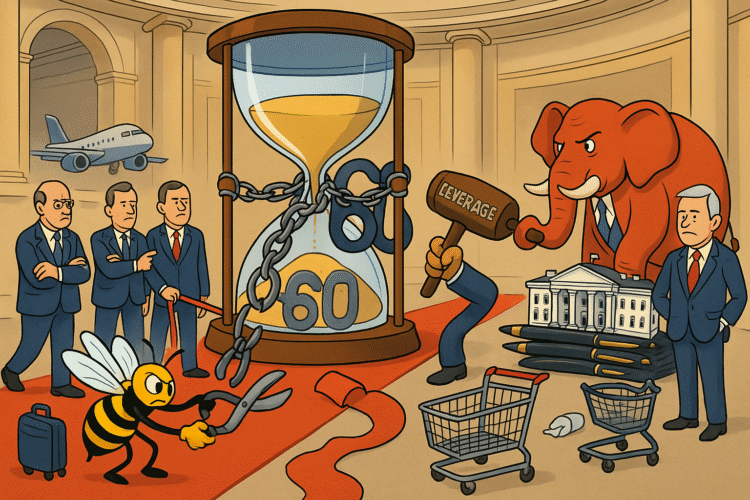
If you start a fight you cannot win, you at least leave with a lesson, a villain, and a plan. Democrats left with none of the above and a press release that reads like surrender.
I agree with Tim Miller and the Pod Save America bros on the core point. It was obvious from the opening bell that the subsidy fight was a hill we were unlikely to take. The math was wrong, the leverage was soft, and the appetite for pain on the other side was bottomless. That is not a reason to avoid conflict. It is a reason to pick a fight you can finish or to extract visible concessions while you still have oxygen. If you go to the mat to extend Affordable Care Act subsidies and the filibuster rears up, you either hold the line or you convert the spectacle into a teachable moment about the tool that keeps the country from governing itself. Neither happened. We got a handshake, a schedule, and a migraine.
Here is the part that will hurt if we say it plainly. The filibuster has become a museum for excuses. It allows senators to perform the ritual of deliberation while handing the real power to whichever executive signs the next stack of directives. You can watch the curve over the last decade. The more the Senate worships at the altar of sixty, the more the White House grows fangs. The party out of power screams about imperial presidents. The party in power whispers about the necessity of acting. Both are telling the truth about a system that outsourced courage to a number.
That is why the collapse here matters beyond the shutdown clock. The Democratic argument for stepping into a shutdown was human. Keep health care within reach for the people who will otherwise get a letter with a new premium they cannot pay. The counterargument from the other side was also human, in the worst way. Use hunger, airports, and fatigue as leverage until the public begs for quiet. When the filibuster became the wall, Democrats had a choice. Keep pushing until the country understood that the wall was the reason nothing moved, or settle for noise control and promise to try again at a date that looks responsible in a headline and useless in a kitchen.
If the plan was never to bleed for subsidies, then the plan should have included a consolation prize that voters could touch. A smaller extension tied to a must pass. An automatic stabilizer that prevented premium spikes during lapses. A binding vote on the calendar that forced the other chamber to put names next to consequences. Instead, the Senate took a promise of a vote later, the legislative equivalent of a store credit from a place that is closing. The messaging then doubled the error. Rather than say, we miscalculated the amount of harm the administration was willing to inflict and we will not protect them from themselves anymore, the story became, this was too hard and now the holidays are coming.
There was another version of this moment that could have honored reality and still built power. It would have sounded like this. We started this fight to keep health insurance affordable. We believed reason would prevail because the alternative was deliberate harm. We discovered that reason was not on the table. Hunger was. Airport delays were. Court filings to block food assistance were. We choose to end the shutdown because the immediate pain has crossed a line. We will now take the question to voters as a referendum on a Senate tool that rewards cruelty and a president who prefers leverage to governance. That version keeps your dignity and your argument. It trusts people with the truth. It names the enemy. It sets a test you can win.
The filibuster is the quiet villain of this story because it lets a minority veto every plan that helps the people who do not have lobbyists. The result is a parade of executive actions that evaporate with the next inauguration. The same senators who praise stability are the ones keeping the country on a pendulum. The same pundits who sigh about polarization are the ones insisting that supermajority rule is the only adult way to pass a bill. The public is not confused by this. They are exhausted by a structure that turns their needs into seasonal content.
If you want to understand why voters stop believing in plans, remember what it feels like to watch an argument end not with a vote, but with a promise about a vote later that may or may not exist. Remember what it feels like to sit through a shutdown and then learn that the outcome is a reset to the same uncertainty that justified the shutdown in the first place. Remember what it feels like to be told that courage lives in podcasts and TikToks. The brand problem is not vibes. The brand problem is follow through.
The most frustrating thing about today is that Democratic leaders have had weeks to plan an exit strategy and to share that with voters and make us part of the process. I understand wanting to end suffering. I do not understand backroom deals being forced down our throats with no explanation. We are not going to fix the Democrats’ brand by doing TikToks or launching podcasts. The brand is a direct reflection of the strength of our elected officials. If we want to purge our weak branding, we have to purge the weak Democrats. I am looking forward to a robust primary cycle and ushering in a new era of Democrats who actually know how to fight. Absolutely pathetic. I cannot believe we caved to this wannabe dictator and his goons. Thanks to the Democrats who voted no. We will remember who bent the knee.
Let us talk about accountability, because this is where the things that feel abstract become kitchen table facts. When the Senate cannot clear sixty for policies that poll like tap water, the White House tries to do the work through agency rules and waivers. Courts then swat those moves around like a cat with a string. States try to patch the holes, and the quality of your coverage, your school, and your water becomes a zip code quiz. Everyone blames everyone else. The only constant is that the filibuster stays holy. If a tool repeatedly blocks majority rule on matters of basic welfare, and the answer is not to remove the tool, the answer must be that we prefer the stalemate.
There is a moral cost to pretending that a shutdown is a neutral tactic. The people who keep planes from kissing at the wrong angle still have to pick up groceries. The parents who budget down to the nickel cannot wash a promise of a vote later and pour it over rice. The staff who return to offices after back pay arrives will remember how long they were asked to wait, and why. You can love responsible government and hate the way this was handled. You can support reopening and still insist that the price of a restart should have included more than a sigh of relief on cable news.
Some readers will say, easy for you to type, harder to govern. True. Governing requires tradeoffs. It also requires clarity about what a party exists to do. If the purpose of power is to deliver broad, durable gains in health, wages, safety, and freedom, then a mechanism that routinely blocks all of the above is not a tradition. It is a trap. Every cycle, we hear that the filibuster will protect us when we are not in charge. What it protects most reliably is the ability of a minority to run out the clock and the patience of voters who thought elections were supposed to change something.
The path forward is not mysterious. It is simply uncomfortable for people who have been trained to fear their own shadow. Say the quiet part out loud. The Senate cannot do its job if it needs sixty votes for every breath. Return the chamber to majority rule for basic governance. Keep supermajority thresholds for narrow categories if you must, but stop pretending that routine supermajority requirements are wisdom. Pair the rules change with a discipline promise. If you hold power with fifty votes and a tie breaker, you are not allowed to pass donor baubles and call it a revolution. You pass kitchen table laws first and you brag about them until people are sick of hearing about it.
Now, the messaging. The public will forgive pain when it has a point. They will not forgive pain followed by confusion. Democrats could have said, we started this to extend subsidies and discovered the other side was fine with weaponizing hunger and holiday travel to get their way. We ended the shutdown because harm won. We will finish the argument where it belongs, at the ballot box. Instead, some of the loudest voices signaled that the fight was simply too hard. Hard is not a verdict. Hard is a description of the only fights worth having. Say you lost a round. Say why. Name who made it worse. Tell people what you will do with power and how they will know you kept your promise. Stop narrating your exhaustion like it is a platform.
There is a habit in the party to manage risk by managing language. Round the edges. Focus group the verbs. Avoid a word that could be misunderstood by someone who was never going to vote for you. This is how you end up with paragraphs that taste like damp toast. People can hear the edits. They can smell the caution. They want a plain explanation of why something hurts and a plan that makes the next month better than the last. The leaders who do this well already know the recipe. Choose a villain that actually exists. Pick a promise you can keep. Attach a date to a deliverable. Show your work. Repeat until the vibe becomes reality because the reality changed.
There is a second habit that must die if the party wants to regain the initiative. Stop protecting Republicans from the natural consequences of their choices. If they want to put food benefits in a courtroom and the courts say no, do not rescue them with a clever procedural workaround that lets them claim responsibility without paying the political price. If they want to keep airports on a razor’s edge to extract concessions, do not give them a headline that reads like teamwork. The public is capable of distinguishing between governance and hostage taking. Help them by pointing the camera at the right hands.
What about the eight who crossed over to fund the government. Some will argue that they read the room and did the necessary thing. Others will say that they turned a leverage moment into a story about Democratic disunity. Both can be true. The question is not whether they are villains. The question is whether leadership had a plan for what would happen if the votes were not there. Either the whip count was off or the leader decided to let moderates and retirees eat the heat while he preserved his brand. Neither looks like strategy. Both look like drift.
There is still a way to convert this loss into a requirement. Treat the next must pass as the vehicle for the health care piece that justified the last month. Announce it now. Put the calendar, the text, and the whip effort in public view. Make the other chamber own its refusal. If the votes are not there by the deadline, move to the rules question. Force a public conversation about why sixty is the number that keeps insulin expensive and coverage precarious. Do not bury the argument in process. Tie it to a bill with a name that sounds like a person. Then run on it without apology.
The bigger picture is this. The Senate has learned to love a tool that relieves it of responsibility. The executive branch has learned to love a vacuum that it can fill with pens. Courts, seeing a seesaw, have learned to love the power to freeze and thaw the country at will. Voters experience this as chaos and boredom at once. Constant noise without durable progress. People tune out until the day a bill arrives that is larger than memory, or a benefit disappears, or a program becomes a raffle. Then they tune back in and wonder why the party that claims to care about them keeps speaking in caveats.
Ending the filibuster is not a silver bullet. It is a reintroduction of cause and effect. You win, you pass a program that lives long enough for people to trust it, and you defend it in plain English. You lose, and the other side does the same, and voters get a choice that means something. Right now, we have a system where victory tastes like compromise that pleases no one and defeat tastes like fatigue. No one gets fed on that diet.
What would governing like you meant it look like the day after a rules change. It would look like extending health subsidies without a calendar cliff. It would look like funding nutrition programs without courtroom games. It would look like energy bills that stop ambushing people with unexplained spikes because regulators were told to protect households first and filings second. It would look like a childcare plan that survives a single news cycle because it was passed like a law, not dangled like a trial balloon. It would look like wage standards that do not require lawsuits to become real. It would look like the party in power talking about the good it did until people roll their eyes, then doing more and talking again.
There is a final reason to do this that has nothing to do with policy. It is about dignity. People can forgive leaders who lose fights they should have lost. They tend to reward leaders who lose for a reason that matters and then come back for another round with a better plan. What they do not forgive is the sense that their pain was used as a prop in a performance that ends wherever the comfortable would like to eat dinner. If you want a brand, build one by telling the truth about hard choices and by making the other side own what they did to win. Then make your case like you live here.
Receipts, Not Vibes
The filibuster did what it was designed to do. It turned a majority into a rumor and a standoff into a story about fatigue. Democrats entered the shutdown promising to defend health care affordability and exited with a promise of a vote later that the other chamber has no reason to honor. The messaging could have told a clean story about miscalculation and the willingness of the other side to use pain as leverage. Instead, too many voices framed the retreat as an admission that fighting is hard. The way out is not mystery. End the shutdown, yes, but attach the substantive fight to the next must pass and say so now. Put names next to consequences. Treat sixty as a choice, not a sacrament. End the filibuster so that governing happens in public with results people can touch. Then talk about those results until the room rolls its eyes, and talk some more, because repetition is how reality beats spin.