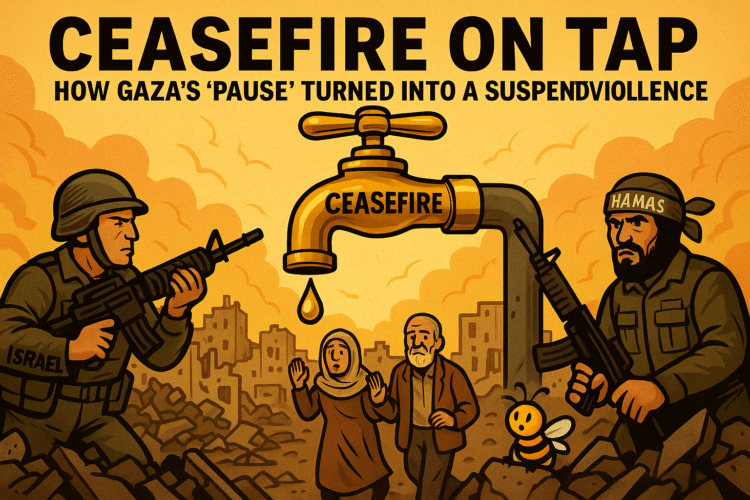
There’s a baffling rhythm to modern war: the violence pauses, the cameras blink once, and the scoreboard resets—but nothing actually changes. On October 17, after Israeli officials claimed Hamas fighters killed two Israeli soldiers near Rafah and breached the U.S.–brokered truce, Israel launched what it called its heaviest wave of post-ceasefire airstrikes—targeting tunnels, weapons sites, and controversially, a former school shelter. And then, just as quickly, Israel announced the ceasefire and aid convoys would resume—under tighter monitoring. The deal’s fragile mechanics are laid bare: the hostages were moved, the prisoners released, yet the core clauses remain unresolved. Enforcement? Verification? Absent. The war hasn’t ended—it’s been repackaged.
The Hostage Swap, The “Pause,” The Illusion
Earlier in the week all twenty living Israeli hostages were transferred via the International Committee of the Red Cross while Israel began releasing roughly 2,000 Palestinian prisoners. From the outside it looked like progress. A ceasefire? Check. Hostages freed? Check. Aid convoys poised? Check.
But inside the wiring of this “truce,” wires are crossed and timers are set. The real script: Israel says “pause,” Hamas says “delay,” mediators say “next phase,” and civilians say “if we survive.” The deal is theater; the fine print is still blank.
Who Watches the Tunnel? Who Counts the Roads?
Tunnels. Weapons. Interim security. Those four words are the iceberg’s tip. Israel wants to neutralize tunnels, enforce patrol rules and reopen Rafah to people—not just aid. Hamas wants recognition, reconstruction and absence of occupation. Both agendas are legitimate. The problem: nobody agreed how to check the agreement. Verification is outsourced to mediators, sensors, and third-party inspectors, but the trust network is brittle.
Consider Rafah’s reopening: Israel acknowledges the aid convoys will resume, but its border crossing stays closed until Hamas returns the bodies of deceased hostages. The crossing becomes not just a checkpoint but a threat. The humanitarian corridor? A hostage. The guardrails of the truce? Suspended.
Whiplash Diplomacy
President Donald Trump insists the truce stands—but simultaneously threatens forced disarmament if Hamas balks. Meanwhile, Benjamin Netanyahu ties any “end of war” to verifiable demobilization, and mediators in Cairo and Doha push updated de-confliction maps and inspector rosters. European partners ready border teams. Everyone prepares for peace, yet the timeline is wedged between fear and leverage.
In other words: the pause is levered by threat. A truce with a handshake made of rope. The smoking-gun moment isn’t when the bombs stop—it’s when the silence is bought.
The Casualty Code
Since the strikes resumed, Gaza’s health ministry reports dozens killed—Israeli spokespeople emphasise targeted militants, and accuse Hamas of violation. Yet Gaza counts violations: forty-seven ceasefire breaches and thirty-plus killed per its media office. The numbers don’t match—not because the data is wrong, but because the lens is broken. One side counts warfare, the other counts survival.
When a former school used as a shelter is hit, the “collateral damage” becomes broadcast damage. The “tunnel neutralized” becomes “home destroyed.” When aid convoys are “monitored more tightly,” the delay becomes the denial. Each “action” is escalatory, each “pause” is provisional.
The Gatekeepers of the Pause
Who sets the terms now? The White House coordination cell is trying to turn lists, escorts, sensors into an enforcement spine. But when those lists were compiled under war who-says-what-counts logic, the spine flexes. The checkpoints that matter will decide whether this is a leverage pause or peace scaffolding.
Key markers:
- Rafah’s reopening date and scope: if aid trucks arrive but people do not, the corridor remains symbolic.
- Repatriation timetable: remaining hostages, bodies exchanged, both sides counting the missing as pressuring variables.
- Aid to the north: stalled fuel, blocked roads, crippled power show that “trust” is fragile engineering.
- Hamas’ internal enforcement: will the group suppress spoilers, or use the lull to reorganise?
- Media and legal oversight: Congress will watch lists and maps, but will courts intervene if the next strike hits a “clean zone”?
This is where the truce either becomes routine, or becomes another accidental war.
Leverage vs Framework
Pause or peace—that’s the binary. A true peace deal would mean third-party monitors, phased disarmament, civil governance, reconstruction, and high-stakes enforcement. A leverage pause means the same preconditions remain, the guns silence for now, but the tables remain set.
Remember the Morag Corridor, the Israeli security zone carved across Rafah to maintain pressure. That piece of architecture was built in war-time; the current “pause” is staffed by architecture but lacking legislation. If a ceasefire holds without legal structure, it’s just a final act of vigilance.
Hostages freed, prisoners released—they sound like benchmarks. They are, but they are also bargaining chips. When the deals are so public yet the enforcement so private, you wonder who they’re really protecting. Civilians certainly aren’t. The residents of Gaza still wait for roads to clear, for fuel to run, for power to return. Meanwhile, the demands remain: tunnels, weapons, patrols.
The Wait, The Crosswalk, The But
Aid convoys resume—but only under monitoring. Tunnels are destroyed—but only when someone agrees where they began. The weapons sites are hit—but only when someone agrees which weapons count. The ceasefire stands—but only until the next provocation.
Here’s the but: when you walk into a crosswalk without lights, you’re still crossing the road—but you’re still exposed. Hamas and Israel both plan for the next stage—but neither has agreed on who drives. The mediators can map it—but cannot fix the engine. The shell is there but the heart may not be.
And while the world watches the truce, the civilians live the intermission. The area north of Wadi Gaza still stutters. The fuel is accumulating like hope under ration cards. Roads are blocked like relief under protocols. The silence is not a promise—it’s a freeze-frame.
Who Benefits From The Lull?
Israeli defence gets institutional breathing room; Hamas gets time to regroup; mediators and donators claim diplomacy works; the public watches but cannot intervene. But the big winners are leverage-builders, not peace-makers.
If Rafah reopens only for aid, not people, the “crossing” becomes a parking lot. If hostages are counted but remains withheld, the deal becomes a ledger. If elections are scheduled but under occupation, democracy becomes a slogan.
In short: power is preserved. Change is postponed. And the fault lines only widen while the truce holds. Because scripts don’t fix rubble. Checklists don’t fuel factories. Monitors don’t rebuild cities.
THE HAUNTING REFLECTION
The final question isn’t whether the ceasefire holds—it’s whether imagination returns. Can people in Gaza cross a border to visit relatives again? Can Israeli families sleep without tunnels beneath their homes? Can children walk to school without grey zone airstrikes overhead?
We call it “pause” because war sounds too direct. We call it “negotiation” because diplomacy sounds clean. But what we’re really watching is a hold-pattern over lives stripped of agency. The truce doesn’t welcome the future—it hopes for the past.
A peace framework would mean structural change. This lurching sequence means survival. The silence held today becomes the threat of bullets tomorrow. The corridors still blocked will not simply reopen—they’ll be reopened on someone’s terms. The settlement of the war is still more auction than accord.
And the last truth is this: When the scope of change begins with who walks through a border and ends with who holds a sensor, the distance between rule of law and rule by list grows smaller. The war is not over—it’s still underwriting every handshake, every convoy, every exchange.
If we mistake the truce for progress, we’ll wake up one day noticing that the guns aren’t firing—but the ground beneath our feet has shifted. And the map of accountability now looks like a scoreboard in perpetual postponement.