Amazon Author Page | Read After the Toast
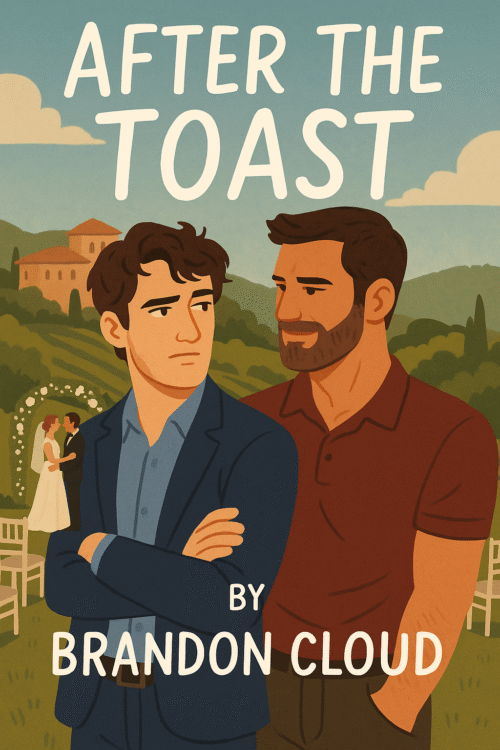
Romantic comedies are supposed to be light, right?
Flirty glances. Cute mishaps. Big gestures and bigger payoffs.
But what if the romance starts with a panic attack at a wedding? What if the laughter comes with grief? What if the meet-cute includes the wrong twin and a slice of charred toast?
Welcome to After the Toast—a queer romantic comedy that’s equal parts hilarious and emotionally wrecking. I wrote this one for the people who laugh mid-breakdown, who text the ex they shouldn’t, who run before it hurts and then look back too late. It’s messy. It’s tender. It’s hopeful in the most reluctant, screw-it-I’ll-try way.
Why I Wrote After the Toast

Because I got tired of gay love stories being either sanitized or sensationalized.
Because I’ve lived the kind of grief that makes you funny in uncomfortable ways.
Because I know what it’s like to stand in a room full of people and still feel like the afterthought.
And because sometimes, love shows up when you’re not ready. It shows up in the form of the wrong person, at the wrong time, after you’ve convinced yourself you’re too much and not enough all at once.
“He looked at me like he knew the version of me I hadn’t tried to perform yet—and liked that one more.”
I don’t write “gay books.” I write books where queer people exist—fully, imperfectly, hilariously, painfully. As protagonists, as villains, as exes and best friends and people who say the wrong thing before doing the right one. Because that’s the truth of our lives—we’re everywhere. We don’t only exist in tragedy or triumph. Sometimes we just burn the toast and fall in love anyway.
What After the Toast Is About (Besides the Toast)
It starts at a wedding in Italy.
A miscommunication. A little too much prosecco. A twin mix-up that was, in retrospect, avoidable.
But really, this isn’t about the wedding. It’s about what happens after—when grief has calcified into avoidance, when love requires staying instead of performing, and when connection demands more than a punchline or a perfect moment.
“He didn’t ask me to be happy. He just asked me to stay. And somehow, that was harder.”
It’s a story about two men who should not work—on paper, in practice, or in proximity—but keep finding themselves circling back to the emotional epicenter they swore they’d avoid. And the toast? It’s not just toast. It’s a metaphor for every botched beginning and burned edge we carry forward anyway.
What’s Beneath the Comedy
Beneath the sarcasm, the excruciating text threads, and the scenes that border on farce, there’s something raw in this book. Because it’s not just about falling in love. It’s about choosing to stay—when it’s easier to ghost, when it’s safer to joke, when it’s smarter to protect yourself.
“Loving him wasn’t the hard part. Staying when it got hard—that’s what gutted me.”
We don’t talk enough about what it means to stay. In queer love stories, we’re so used to fleeing—historically, emotionally, physically. Safety often lives in movement. But healing lives in stillness. In the terrifying act of remaining in the room when your worst self shows up—and letting someone see it anyway.
That’s what After the Toast explores. Not just the fireworks, but the fallout. Not just the kiss, but the conversation after.
“The problem wasn’t that he didn’t love me. It was that I didn’t believe him when he did.”
Why This Story Matters
Because rom-coms matter. They let us practice hope.
Because grief deserves to coexist with desire.
Because queer people deserve to be funny, sexy, reckless, and emotionally complicated in books that don’t ask us to be perfect or palatable.
After the Toast is for the ones who overthink, who panic-flirt, who shut down mid-vulnerability and then spiral later in the shower. It’s for the ones who’ve buried someone and still carry the timeline of that loss like a splinter in their shoe. It’s for anyone who’s ever tried to outrun themselves and accidentally ran straight into someone who refused to let them vanish.
Final Thought:
This isn’t a love story about fireworks. It’s a story about the second drink, the awkward silence, the burnt breakfast, the refusal to give up when it would be easier to leave.
Because love doesn’t always arrive on time.
Sometimes it shows up after the toast.