The Prestige Necromancy Business
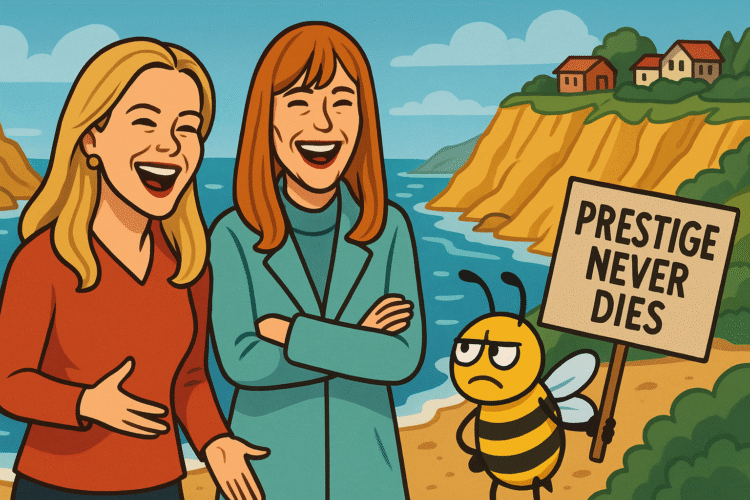
HBO just announced what Hollywood does best: recycling. Big Little Lies—the Monterey mommy noir that gave us Nicole Kidman in silk blouses whisper-screaming about trauma and Reese Witherspoon perfecting the art of weaponized brunch—is being resurrected for a third season.
Francesca Sloane, fresh off Mr. & Mrs. Smith, is tasked with scripting the opener and executive producing, while David E. Kelley lingers like the godfather of rich-white-people problems. Kidman and Witherspoon will reprise their roles, because no prestige reboot is complete without the actresses who can deliver a monologue while also selling you a $900 cashmere wrap in real time.
It’s been six years since Season 2 limped across the finish line, eight since the Emmy-winning debut. And now, because HBO can’t just keep showing Succession reruns until the end of time, Monterey’s seaside drama is back. The tagline should be: When in doubt, reboot the trauma.
HBO’s Midlife Crisis
There was a time when HBO meant something. Prestige. Boldness. Appointment television. Now, in 2025, HBO is in the same place as everyone else: praying to the algorithm and raiding its own graveyard for IP.
Reviving Big Little Lies is less about narrative necessity and more about brand panic. Max—sorry, just Max—is fighting Disney, Netflix, Apple, Amazon, and whatever free ad-supported service is currently buying up the rights to ALF. HBO needs something familiar, something glossy, something that screams “we still do drama better than anyone else.”
Enter Big Little Lies Season 3, because apparently the only thing harder than killing a Monterey husband is letting a prestige drama stay dead.
Francesca Sloane: Welcome to the PTA
Poor Francesca Sloane. She just inked a two-year overall deal with HBO, probably imagining she’d get to invent something new. Instead, she’s been handed the keys to Monterey’s most dysfunctional carpool.
Her Mr. & Mrs. Smith reboot was slick, stylish, self-aware. Now she gets to write Reese Witherspoon weaponizing a group text. That’s what we call a career pivot.
She’ll be joined by David E. Kelley, still squeezing juice out of courtroom melodrama like it’s 1998, and Reese and Nicole, who know a good executive producer credit when they see one. Meanwhile, Liane Moriarty, whose original book started this mess, is apparently scribbling “new material” in the margins. Translation: “we’ll figure it out as we go.”
The Ghost of Jean-Marc Vallée
Every piece of reporting on Season 3 has the same caveat: can Big Little Lies recapture its lightning without director Jean-Marc Vallée, who died in 2021?
The answer is obvious: no. Vallée’s style was what made the first season hum—elliptical cuts, whispered dread, the sense that the Pacific Ocean itself was judging these women. Without him, Season 2 felt like a book club meeting filmed with prestige lighting. Bringing it back now risks turning grief into garnish: “What would Jean-Marc have done?”
But prestige TV doesn’t care about ghosts unless they can be monetized. So the show must go on.
The Monterey Five, Aged Like Wine and Marketing Deals
Six years later, what do we expect? The Monterey Five are older, wiser, and still traumatized. Nicole Kidman’s Celeste probably has a podcast now: Gaslight, Gatekeep, Girlboss: My Journey. Reese Witherspoon’s Madeline is running for city council on a platform of banning TikTok near the farmer’s market. Shailene Woodley’s Jane is still wandering around in chunky sweaters, being confused by technology. Laura Dern’s Renata is selling NFTs of her meltdowns. Zoë Kravitz’s Bonnie is probably doing ayahuasca with Goop.
And yet, HBO expects us to believe that the chemistry that powered 2017’s breakout hit is just waiting in the wings, like a casserole in Nicole’s fridge.
Do We Need This?
Of course not. But “need” is not the point. Prestige television has been swallowed by streaming’s hunger for familiarity. Originality is risky. Reboots are safe. Six years is just long enough for nostalgia to outpace memory.
Do you remember Season 2? Neither do I. But HBO is betting you remember enough of Season 1’s memeable perfection to log back in.
This isn’t about narrative closure; it’s about narrative branding. It’s about telling subscribers, “We still do this. We still have Reese and Nicole. We’re still HBO.”
The Broader Stakes: Nostalgia as Currency
Big Little Lies Season 3 is a test case. If Monterey’s brunch moms can hold an audience in 2025, then no show is truly dead. Every prestige drama becomes a zombie: lying dormant until the content calendar runs dry. Six Feet Under: The Prequel. The Sopranos: Junior High. Game of Thrones: Dunkin’ & Egg.
We’ll watch because we crave recognition more than risk. Nostalgia is the most reliable currency in streaming. The Monterey Five aren’t just characters—they’re reminders of when prestige TV still felt special.
The Irony of Lies That Won’t Die
The show is called Big Little Lies. The lie here is that it ended. The bigger lie is that anyone asked for more. But prestige branding means never admitting a clean finale. It means holding IP hostage until shareholders are satisfied.
Season 3 will inevitably promise to “go deeper” into trauma, friendship, motherhood. It will also inevitably give us more aerial shots of Monterey cliffs while Reese yells about carpools. Both things can be true.
The ultimate irony? The show that started as a sharp, feminist critique of suburban perfection will now serve as HBO’s insurance policy against obsolescence.
HBO’s Legacy Play
Six years is a long time in TV. The audience is older, the culture more fragmented, and HBO less untouchable. But if Season 3 lands, HBO can pretend to be the king again.
It’s a legacy play. HBO doesn’t just want to stream content. It wants to remind you that it invented prestige. And what better way than resuscitating a show that once defined it?
Never mind that the original lightning in a bottle came from a different cultural moment, a different creative team, and a director who’s no longer here. The gamble is that nostalgia papers over the absence.
Monterey as America’s Mirror
Why does this show linger? Because Monterey is America’s favorite mirror: privilege, trauma, friendship, secrecy, the desperate need to appear perfect. Season 1 nailed it. Season 2 stumbled. Season 3 is HBO betting that the mirror still reflects, even if it’s cracked.
But mirrors lie. That’s the point. We’ll tune in, not because we believe Monterey has something new to teach us, but because we want to remember a time when prestige TV still felt alive.
Summary: The Lie That Never Ends
HBO has moved Big Little Lies into official development for Season 3, six years after its second season and eight after its Emmy-winning debut. Francesca Sloane is writing the first episode and executive producing with David E. Kelley, Nicole Kidman, and Reese Witherspoon, while Liane Moriarty develops new material. The revival fills HBO’s prestige slate but raises the obvious question of whether it can work without the late Jean-Marc Vallée, whose vision defined Season 1. This isn’t about narrative necessity so much as HBO’s need to reassure subscribers that it still does prestige, even if it means digging up old graves. The biggest lie is that stories end when intellectual property still sells, and Season 3 will prove that in Monterey, nothing dies—not even closure.