A deeper look into the long tail of trauma, bureaucracy, and selective compassion
Somewhere between your third scroll past an Instagram infographic and the seventh “breaking news” chyron that wasn’t, Gaza kept happening. And while the rest of the world moved on to Taylor Swift ticket drama and the return of pumpkin spice fascism, a not-so-minor humanitarian crisis kept simmering on the back burner of global consciousness—right next to whatever lukewarm concern we had left.
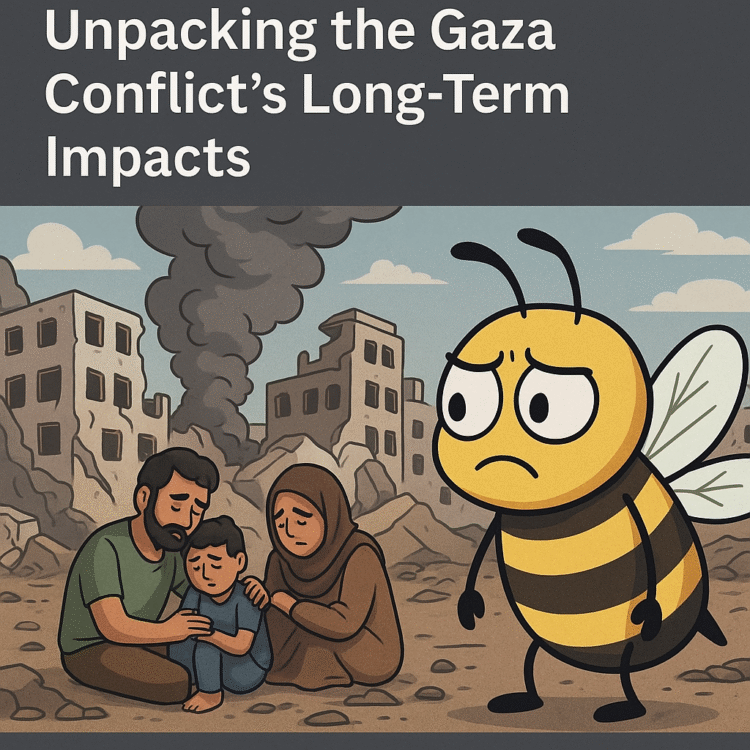
The Gaza conflict is the disaster that never clocks out. It’s a conflict so generational, kids are born into rubble and raised on ceasefires that last about as long as your latest detox phase. But sure, let’s call it “complicated” and keep it moving.
Let’s not.
Because the long-term impacts of Gaza aren’t just political. They’re emotional, infrastructural, existential—and honestly, exhausting in a way that should haunt us more than it does.
Welcome to the World’s Most Densely Populated Ghost Town
Gaza is 25 miles long, walled in like a geopolitical terrarium, and somehow expected to behave as if it’s not actively being starved, bombed, surveilled, or blamed for its own suffering. It’s a place where the electricity works about four hours a day, the water tastes like despair, and the term “open-air prison” is considered both accurate and somehow still too polite.
And yet, every news cycle tries to make the conflict sound new. Like trauma has a refresh button.
“Tensions flare again.”
“Violence erupts.”
“A new escalation.”
As if Gaza hasn’t been in a permanent state of escalation since AOL was a dial-up tone.
Childhood as a Crisis Management Plan
Over half of Gaza’s population is under 18. In most places, that’s called “a vibrant youth demographic.” In Gaza, it’s called “collateral.” These are children who’ve lived through five wars before puberty. They know the sound of drones better than lullabies and can identify the make and model of a missile better than most U.S. senators can identify a uterus.
And yet, somehow, the world looks at them and says, “But were they throwing rocks?”
Trauma here isn’t a diagnosis—it’s a rite of passage. A generation raised on rubble, rationed hope, and whatever internet access remains after the latest airstrike knocks out communications for a week.
Planning for a Future You’re Not Allowed to Have
Here’s a fun twist: The Trump administration once reportedly deleted congressionally mandated climate reports from U.S. government websites. Why? Too depressing. Too political. Too… accurate.
Which is ironic, given that Gaza doesn’t even get the luxury of deleting its future. It’s just denied one outright.
Rebuilding isn’t a long-term plan in Gaza. It’s a recurring dream sequence where funding is dangled, permits are denied, and aid gets filtered through enough bureaucracy to make FEMA look like Amazon Prime. Every time a school, hospital, or apartment building gets rebuilt, it lives with the understanding that it may be bombed again—possibly before the paint dries.
But sure. Let’s talk about “peace processes.”
Usually, that means one side is forced to negotiate under blockade while the other gets to set fire to international law in broad daylight and still get invited to dinner.
Whataboutism Is Not a Foreign Policy
The long-term political impact of Gaza is this: The world has learned how to professionally look away.
The same governments that arm conflicts also send aid packages and condolences. The same citizens who protest genocide in one country will justify it in another, depending on whose flag is trending.
And the media? Darling, they’ll cover it—until someone important says they shouldn’t. Or until the algorithm decides you care more about celebrity divorces and 5-minute dinners.
Meanwhile, activists on the ground are accused of bias for asking not to be vaporized. Palestinian journalists risk their lives to post a single video. And if their internet’s not out, it will be soon.
The Hidden Cost of Being Seen
Being visible in Gaza is a liability. Being alive is political. And asking for dignity is treated as extremism.
In most conflicts, surviving makes you a refugee. In Gaza, it makes you a headline—for about 30 minutes.
The long-term impact of Gaza is erosion. Erosion of faith in international law. Erosion of trust in the systems that were supposed to protect civilians. Erosion of memory—because how can the world remember what it never really bothered to learn?
“We don’t want your thoughts and prayers,” one Gazan youth said in a viral clip last year. “We want to not die.”
So What Happens Now?
You already know the answer.
There will be another airstrike. Another denial. Another explosion reduced to a paragraph buried in the feed. Gaza will become a trending hashtag, then a forgotten one. Again.
And yet, the people will survive. They will create. They will teach, mourn, dance, write, and love in spite of everything designed to break them. Because when your existence is treated like a threat, joy itself becomes resistance.
Final Thought
If you’ve made it this far, good. Now stay. Stay angry. Stay curious. Stay suspicious of simple answers. And for the love of nuance, stop quoting only one side’s press releases.
Gaza doesn’t need your pity. It needs your memory. And your discomfort.