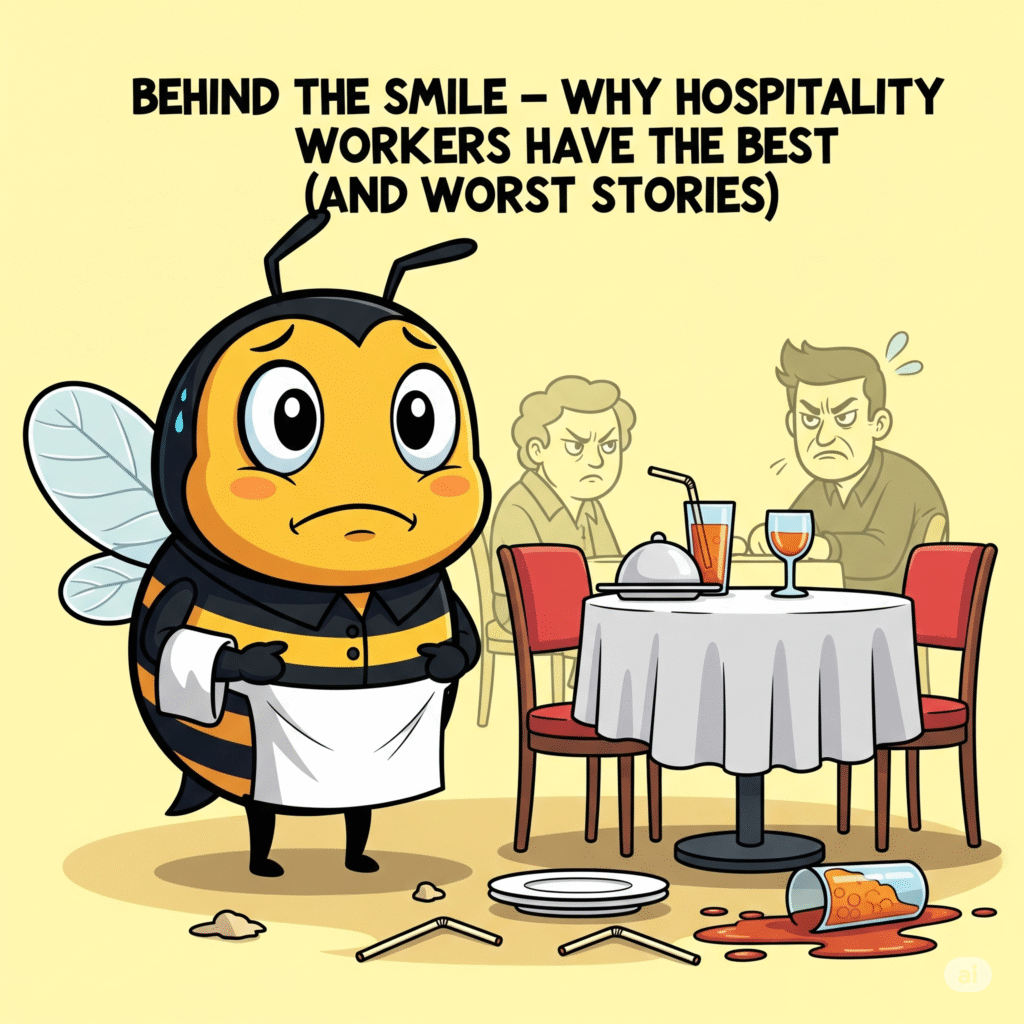
The polished lobby gleams. The fresh flowers sit serenely in their vase. A welcoming smile greets you at the front desk. For most, a hotel is a temporary haven, a seamless extension of comfort and convenience. For those of us who have spent years navigating its intricate currents, however, a hotel is a stage for the endlessly bizarre, the profoundly human, and the hilariously absurd. Today, my thoughts turn to a universal truth known by anyone who has ever worn a name tag in a service industry: Why Hospitality Workers Have the Best (and Worst) Stories.
Having transitioned from the high-stakes, raw realities of nursing administration to the equally demanding, yet often more existentially baffling, world of hospitality management, I’ve collected a truly unique compendium of human behavior. And let me tell you, the stories—oh, the stories—are rich, ranging from the heartwarming to the utterly horrifying, often with a generous serving of dark humor. Because when you witness humanity at its most vulnerable, its most entitled, and its most utterly unhinged, you either laugh or you cry. I prefer the former, usually.
The Human Zoo: A Never-Ending Spectacle
A hotel is, in essence, a microcosm of society, a temporary human zoo where guests, shedding the usual constraints of home, often revert to their most basic (and sometimes most bizarre) instincts. And hospitality workers? We have front-row seats to the entire, often unhinged, spectacle.
- The Unveiling of Entitlement: There’s a particular kind of entitlement that blooms under the roof of a hotel, especially among those who believe the price of a room grants them dominion over the laws of physics and human decency. We’ve seen it all: guests demanding a full refund because the sun set on the “wrong” side of their room, demanding a complimentary upgrade because their dog “feels depressed,” or throwing a tantrum because their coffee was lukewarm (a particular favorite, given my recent personal experiences with “Karens”). The audacity, the sheer theatricality of some demands, is astounding.
- The Bizarre and Unexplainable: People do the weirdest things in hotels. They lose false teeth in the ice machine. They build elaborate pillow forts spanning multiple rooms. They attempt to cook full, elaborate meals on a single hot plate meant for warming soup. They try to sneak in exotic animals (we once had a guest attempt to bring in a full-sized miniature horse). The “why” is rarely discernible; the “what” is always memorable.
- The Gross and Unsanitary: This is where the nursing background really kicks in. While I’ve seen things in healthcare that would make a seasoned mortician blanch, hotels offer their own unique brand of biological horrors. The state of some rooms after checkout, the unspeakable messes left behind, the deliberate defilement of linens—it’s a testament to humanity’s capacity for filth when they believe no one is watching. Or, worse, when they believe someone else will clean it. It’s a reminder that not all bodily fluids are contained in a medical setting.
- The Profoundly Sad: Amidst the chaos and the absurdity, there are moments of profound sadness. Guests grappling with illness, loneliness, loss, or desperation. The quiet despair behind a forced smile. The elderly guest who just wants someone to talk to. These moments remind you that behind every reservation is a human story, often a vulnerable one, making the job less about transactions and more about unexpected connections.
The Grind: Beyond the Glamorous Façade
The public perception of hospitality often aligns with its glamorous facade: beautiful lobbies, lavish events, seamless service. The reality, for the workers, is a relentless grind, demanding immense patience, emotional labor, and a particular kind of dark humor to survive.
- The Smile That Hides a Multitude of Sins: Hospitality workers are masters of the professional smile, the unwavering polite tone, even when being yelled at by an unhinged guest or dealing with an unspeakable mess. It’s a performance, a shield to protect your own sanity, and it’s exhausting.
- Problem-Solving on the Fly: Every day is a rapid-fire series of unexpected problems: broken pipes, overbooked rooms, missing luggage, medical emergencies (where my RN skills are suddenly, surprisingly, relevant again). You learn to think on your feet, to improvise solutions, and to remain calm under pressure.
- The Emotional Labor: This is often the hidden cost. Constantly managing other people’s emotions, catering to their whims, and absorbing their frustrations, takes a significant toll. It can lead to burnout and a subtle hardening of the spirit if you don’t actively work to protect your peace.
- The Unsung Heroes: Behind every seamless check-in, every sparkling room, and every delicious meal are hundreds of dedicated individuals—housekeepers, maintenance staff, bellhops, cooks, front desk agents—working tirelessly, often invisibly, to ensure the guest experience. Their efforts are monumental, their stories often unheard.
The Best (and Worst) Stories: Why We Keep Telling Them
So, why do hospitality workers have the best, and often the worst, stories? Because we witness humanity in its rawest form. We see people at their best (the joy of a family reunion, the tender moments of a romantic getaway) and at their absolute worst (the entitled tantrum, the casual cruelty, the horrifying messes). We are privy to secrets, to dramas, and to absurdities that would make a novelist blush.
And we keep telling these stories, often with a knowing chuckle and a shake of the head, for several reasons:
- Therapeutic Release: Laughter is truly the best medicine. Sharing a ridiculous anecdote with a fellow weary traveler of the industry is a vital release, a way to process the stress and absurdity.
- Validation: Telling these stories validates our experiences. It confirms that we’re not imagining the bizarre, that our patience is indeed being tested by real, often unbelievable, human behavior.
- Bonding: Sharing these war stories creates a unique bond among hospitality professionals. It’s a shared understanding, a collective commiseration, and a testament to the resilience required to survive.
- The Dark Humor: The sheer audacity of some situations, the outrageousness of some guest demands, can only be met with a healthy dose of dark humor. It’s how we find the comedic thread in the midst of chaos, turning frustration into a shared laugh.
From the unspeakable horrors left in a room to the oddly specific demands of a guest’s pet chihuahua (I’m looking at you, Daisy!), my years in hospitality have provided a never-ending wellspring of fascinating tales. They are a constant reminder that humanity is a complex, contradictory, and endlessly entertaining species, and that behind every polished façade lies a story waiting to be told.
What are your most memorable (good or bad) hospitality experiences? What industries do you think harbor the most incredible untold stories? Share your thoughts below – let’s discuss the fascinating, often absurd, world of service!