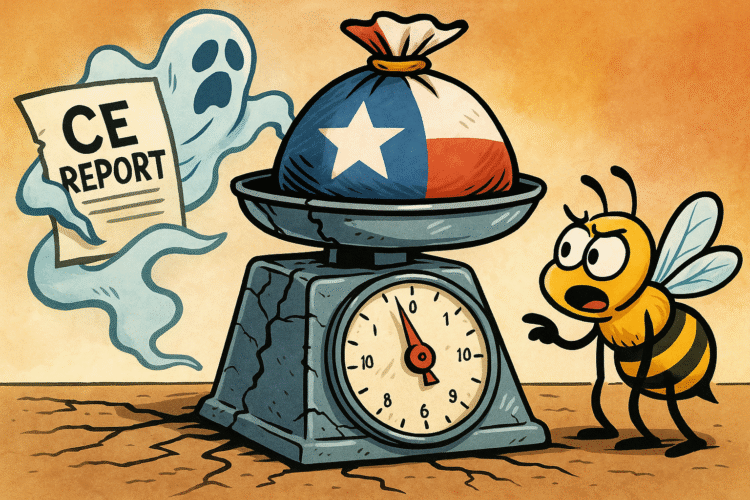
The Ghost in the Ledger
Every empire has its rituals. Rome had the census, England had the coronation, and the United States has the Bureau of Labor Statistics dropping PDFs like they’re scripture. The Consumer Expenditure Survey—CE, to the faithful—was supposed to arrive September 23, like manna in spreadsheet form. Instead, it’s been postponed indefinitely. No new date, no clear explanation, just a polite “we’ll get back to you.”
The BLS, that sleepy back-office of government where statistics are meant to be dull and uncontroversial, has suddenly become the star of its own budget horror film. Staffing shortages. Strained resources. Cutbacks in CPI sampling. Former commissioners William Beach and Erika McEntarfer warning that integrity itself is on the line. Integrity. As in: if the ledger is crooked, so are the numbers that decide whether Grandma eats generic cereal or name-brand cornflakes this winter.
What the CE Does
The CE is the country’s running diary of how Americans spend money. It’s not flashy—no viral TikTok influencer is dropping unboxings of “Table B2201: Average Annual Expenditures for Tobacco Products and Smoking Supplies.” But the CE is the backbone of the Consumer Price Index. Every year, it tells the government how much weight to give each category in CPI. If Americans spend more on rent, rent matters more. If we’re all suddenly investing in therapy goats and CBD dog biscuits, those categories inch upward.
It’s how inflation is measured with at least a veneer of accuracy. The CPI is the yardstick for Social Security cost-of-living adjustments, union contracts, and Federal Reserve obsessions. Without updated weights from the CE, the CPI becomes like a bathroom scale permanently set to 2019: you might think you’re tracking reality, but the thing is lying to you.
Last Year’s Precedent
This isn’t even the first time. Last year, the CE report was quietly delayed and rescheduled. Then, it limped out late, just in time for BLS to still scrape together new CPI weights for 2025. Everyone told themselves it was fine. Government statistics, like airline flights, are allowed one delay before anyone panics.
But now? Back-to-back postponements. The second time is no longer a fluke. It’s a pattern. And patterns in government data are like patterns in your medical charts: once you see them, you start drafting a will.
Why the Delay Matters
In theory, a late-2025 release still leaves enough room for BLS to refresh the CPI weights in early 2026. But the wiggle room is shrinking. Each postponement trims the lead time statisticians need to calibrate the index. Cut too much, and you’re either rushing the process or punting it another year. Neither inspires confidence.
The CE is already a fragile beast. It requires Americans to accurately recall what they spent on everything from gasoline to paper towels to Netflix subscriptions. The statistical adjustments are designed to smooth out human error. But if the collection itself is underfunded, if the surveyors are cut back, if the staffers writing the weighting algorithms are overworked and underpaid, the foundation starts to wobble.
And when the foundation wobbles, the skyscraper built on top—the CPI—starts to lean like a Pisa made of pivot tables.
The Knock-On Stakes
Inflation Tracking
Markets live and die on CPI releases. A tenth of a percentage point in CPI inflation can move bond yields, tank stocks, and rearrange Jerome Powell’s blood pressure. If CPI weights are stale, inflation tracking becomes less about reality and more about guesswork. Traders hate guesswork. They tolerate risk, but not statistical ambiguity.
COLAs and Contracts
Social Security beneficiaries receive annual cost-of-living adjustments based on CPI. That’s 70 million Americans, most of them retirees, living on margins where $20 a month means actual meals versus canned soup. Union contracts are indexed to CPI too. When the weights don’t reflect reality, the raises don’t either. Every postponed CE report is a pickpocket skimming pennies from wallets in broad daylight.
Fed Watchers
The Federal Reserve, already straining under Trump’s latest attempts to stack the board with campaign donors in economist drag, has to make monetary policy with defective binoculars. If CPI weights are lagging reality, the Fed is chasing ghosts. Rate hikes and cuts become political theater performed on bad data.
The Satire of Scarcity
The cruel comedy here is that the richest country on Earth cannot seem to adequately fund the office tasked with measuring its own economy. We can drop $886 billion on the Pentagon, shovel subsidies into corporate maw, and build walls to nowhere in Texas deserts. But paying enough statisticians to tabulate household expenditures? Too expensive.
We live in a country where the Consumer Expenditure Survey is treated like an optional subscription, the kind you cancel when you need to trim the household budget. But canceling Netflix only deprives you of prestige dramas. Canceling—or underfunding—the CE deprives the entire nation of reliable inflation data.
The Political Theater
Former commissioners Beach and McEntarfer issued their warnings with the dry panic of insiders who know the roof is leaking but can’t get Congress to notice until the house floods. Strained staffing. Budget cuts. The bureaucratic equivalent of flashing red lights.
But will anyone listen? Of course not. Politicians don’t read CE tables. They barely understand CPI except as a number to cherry-pick in campaign ads. “Inflation is down to 2.9%!” or “Bidenflation is killing your wallet!” They don’t ask how that number is built, whether the weights reflect 2025 or 2019, whether the statistical integrity is intact.
Satire writes itself: the very people who scream about inflation the loudest are the ones who slash the budgets of the agencies tasked with measuring it correctly.
A System That Pretends Precision
The irony is that even in good years, the CE is more guesstimate than gospel. Americans underreport alcohol consumption, overreport charitable donations, and forget entire categories of spending. The survey smooths the errors with statistical wizardry, producing something “close enough” to reality.
But cut the staff and budgets, delay the release, and “close enough” becomes “don’t ask.” Then you’re not measuring inflation. You’re measuring the government’s tolerance for statistical negligence.
The Private-Sector Temptation
Every time BLS stumbles, private-sector data firms salivate. Wall Street already pays for “alternative data” streams: credit card records, grocery scanner data, proprietary models. If CE collapses, the temptation will grow to let private firms dominate inflation tracking.
Imagine it: CPI powered by Visa, MasterCard, and Walmart loyalty cards. Data integrity outsourced to corporations with obvious profit motives. No longer a public good, but a monetized service. “Inflation is whatever JPMorgan says it is this quarter.”
The Global Context
Other advanced economies manage to fund their statistical agencies. The EU has Eurostat. The U.K. has the ONS. Canada, small as it is, has Statistics Canada humming along. They don’t always get it right, but they don’t openly admit to cutting back samples and postponing core reports without explanation.
America, meanwhile, increasingly treats official statistics as optional. The world watches. Investors notice. When U.S. data becomes unreliable, global markets hedge against American numbers. The dollar’s credibility erodes at the margins.
The Absurdity Amplified
Think of it this way: the CE is the receipt. CPI is the total at the bottom of the bill. And right now, the cashier is telling us, “Sorry, we lost the receipt. Trust us on the total.”
Would you?
The Stakes in 2026
BLS insists that even a late-2025 CE release will still allow refreshed CPI weights in early 2026. Maybe. But it assumes the delay is brief, the staff aren’t hemorrhaging, and the integrity warnings are heeded. That’s a lot of assumptions for a system already wobbling.
If the refresh falters, CPI weights will remain stuck. Social Security checks will be calculated on stale data. Contracts will lock in the wrong adjustments. The Fed will set policy on sand. All because the country decided that counting spending habits was less important than tax cuts or drone fleets.
The Satire of Priorities
We live in a country where politicians can argue for hours about the gender of cartoon characters, but the postponement of the CE passes with a whisper. Where the president can rage about Antifa as a “major terrorist organization,” but no one rages about the quiet collapse of statistical integrity. Where comedians are silenced on late-night television, but statisticians are silenced by attrition.
This is the joke: America is losing track of what its citizens spend money on, while spending recklessly on everything else.
Summary: A Broken Yardstick for a Wobbly Empire
The Consumer Expenditure Survey, delayed again, is no minor bureaucratic hiccup. It is the foundation for the Consumer Price Index, the number that drives inflation tracking, Social Security COLAs, labor contracts, and Federal Reserve policy. Former commissioners warn of crumbling integrity, as staffing and budgets collapse under political indifference. A late-2025 release may still refresh CPI weights in 2026, but the margin for error is shrinking, and the stakes are colossal: retirees’ checks, workers’ contracts, traders’ bets, and the credibility of U.S. data worldwide. The richest country on earth cannot find the resources to fund the very statistics that tell it how rich—or poor—it really is.