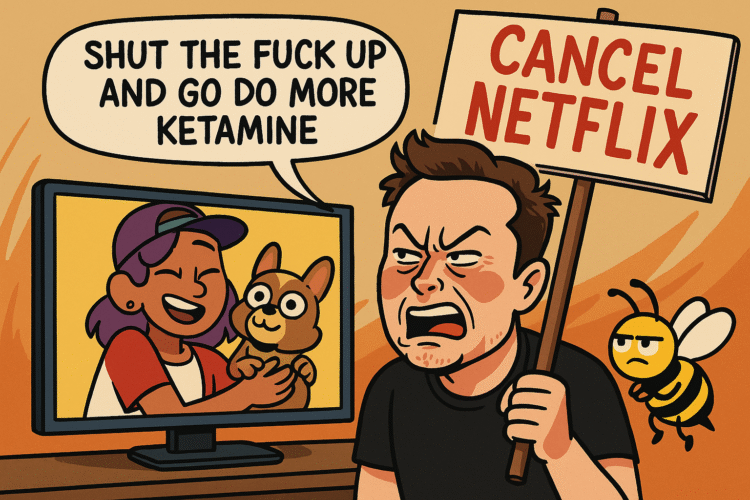
Elon Musk, the self-styled “King of Free Speech,” is no stranger to drama. Yet on October 2, 2025, he lit a fuse that smelled less like free-speech fireworks and more like cultural annihilation. Via his X platform, with 227 million followers watching, Musk called to “Cancel Netflix.” His target: a clip from Dead End: Paranormal Park, a Netflix animated series that had ended in 2023, whose transgender protagonist he decried as “inappropriate for kids.” The clip, resurrected from obscurity, had been edited and circulated by Libs of TikTok—Musk amplified it. The backlash cascaded: harassment of the show’s creator Hamish Steele, vocal defense from actor Zach Barack, and renewed debates over who controls children’s media.
This spectacle needs context—and a reckoning. Because when “free speech” becomes a weapon aimed at representation, you know the war has already changed.
The Unspooling Chain of Amplification
Sometime on October 1, Libs of TikTok posted a clip from Dead End: Paranormal Park, zeroing in on a moment in which the show’s transgender protagonist participates in an emotional, affirming scene. The clip was cropped, framed, stripped of context, captioned to provoke outrage. The next morning, Elon Musk reposted it with a simple instruction: “Cancel Netflix.” He accompanied it with a meme mocking the character, a sarcastic take on “safe content,” a jab at “kids these days,” and a half-tag at Netflix’s algorithms.
Within hours, his followers mobilized. Hashtags like #CancelNetflix trended. Complaints bombarded Netflix social media. Online reviews rating the show down surged. In right-wing circles, pundits used the clip as proof that “woke ideologues” had seized media. The machinery of outrage whirred back to life.
On Oct 2, Steele—creator and showrunner—posted a calm, firm response: the show featured transgender characters thoughtfully, with input from LGBTQ+ creatives. He invited people to watch the full episodes, not the out-of-context clip. Zach Barack, voice actor for a transgender character on the show, joined: he described how representation in media saved lives, how queer kids see themselves in characters, and how attacks like this stoke danger in real life. They faced vile replies, threats, trolling—but they also received public support from segments of the creative community.
Netflix, as of that reporting, remained silent. It offered no public statement, no defense, no counter-narrative. Its muted posture said more than any public apology could. Elsewhere, Variety ran an exposé on the clip’s editing and misrepresentation; The Verge deconstructed Musk’s amplification strategy; the San Francisco Chronicle published voices from trans youth speaking to what the show meant to them.
The Mechanics of Cultural Cancellation
This is not about artistic critique. It is about using social-platform power to revive old content as weapon, to force media houses into shrinkage, and to terrorize creators who tell inclusive stories. Musk’s “Cancel Netflix” call isn’t ironic loyalty to free speech—it’s a show of force: I can silence you by pulling the social rug from under you.
Calls for subscriber boycotts emerged the same day. The message: if you continue paying Netflix, you are complicit in “grooming children.” Pundits talked about “woke content quotas” in kids’ media, citing the Trans character as proof of a sinister agenda. This is familiar territory: ideological pressure campaigns dressed as consumer activism. Dead End is the test case. If they can force Netflix to retreat, what show gets canceled next: queer characters in cartoons? BIPOC leads? Science fiction that imagines diversity?
It is eerily reminiscent of moments past: when Arthur faced controversy for same-sex weddings, when cartoons featuring gay parents got complaints, when children’s books about race or gender told stories of fear, backlash, and restraint. Each time, pressure was applied, studios recalibrated, creators retreated or sanitized. Musk’s move is a redux at scale. The difference is the mega-platform magnifier: one tweet from Elon can reanimate the culture machine overnight.
The Irony of the “Free Speech King” Calling for Censorship
It’s delicious in its cruelty: the man who decries “cancel culture” now weaponizes canceling. The purist of bluster now demands a real platform be silenced, because it includes trans people in its content. The champion of free expression tries to stifle expression. The joke writes itself.
But it is not funny for the people whose stories are attacked, for the creatives whose careers now risk corporate overhead, for the children who see themselves erased. When “free speech” becomes a sword to lop off inclusion, it’s no longer a guard. It’s a blockade.
What Happens to Netflix and the Platform Ecosystem
Netflix cannot ignore this attack forever. If creators lose faith that inclusive stories are safe, Netflix must choose: stand behind representation or back away from risk. A retreat sets precedent: when outrage storms arrive, publishers, streamers, and networks will flinch, censor, cut, or sanitize rather than withstand assault.
The cultural economics shift: inclusive series cost more politically, even if not financially. The bias against risk grows overt. Projects centering underrepresented voices will need greater guarantees or insurance. Platforms may require “safe net” clauses or more conservative content criteria. The chilling effect stretches beyond Dead End — every inclusive creator will map Musk’s playbook onto their next pitch.
What Matters Next
The metrics that will tell us if this moment endures:
- Does Netflix respond—publicly and forcefully—or stay muted?
- Do other creators rally, refuse silence, speak their names, their identities, their stories?
- Will right-wing pressure campaigns replicate the model: resurrect old content, amplify it, call for platform bans?
- Will funding, licensing, and regulation respond—will states or Congress attempt to restrict “inappropriate for children” definitions?
- Will inclusive children’s media shrink, or will it surge in defiance?
If the silence wins, creators will learn that inclusion is optional when platforms tremble. If the pushback wins, Musk’s cancellation gambit resolves into one more failed spree in the social media battlefield.
This isn’t a caricature of free speech or culture wars. It is a warning: the “free speech king” has drawn his scalpel and is asking you to cancel not ideas, but identities. If the platforms and creators do not stand, representation will become the terrain most policed, most constrained, most surveilled.
So shut the fuck up about free speech if you’re going to wield it to silence trans people. Go do more ketamine or start a discourse podcast or whatever. But leave our stories alone.