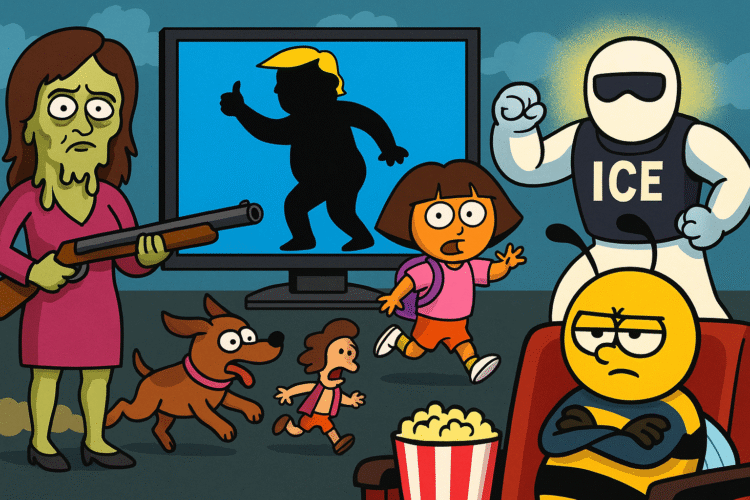
South Park is back. And this season, it’s swinging harder than ever — not content to linger in the margins, the show has waded into naked deepfakes, Satanic pregnancies, face-melting governors, ICE raids that include dogs, CPC principal rebirths, and a nonstop blitz of Trump-era parody across every frame. If you’re keeping score, here’s your field guide to the first five episodes: what they lampoon, how the creators artfully weaponize satire, how audiences responded, and why this franchise revival feels less like cartoon nihilism and more like political resistance.
The Setup: Streaming Deals, Ratings Hype & a Mid-Season Return
Season 27 premiered on July 23, 2025, after a delay from an earlier intended July 9 start. Matt Parker and Trey Stone had signed a massive deal with Paramount+ that aligned Comedy Central’s cable runs with the streaming service, giving them the kind of financial safety net and corporate backing that allowed for more risk-taking.
When “Sermon on the ‘Mount” aired, it drew nearly six million viewers in just three days across Comedy Central and streaming — the biggest opening since the late 1990s. The second episode spiked even further, nearly doubling its predecessor’s cable numbers, proof that audiences were hungry for sharp, outrageous satire.
The release schedule landed biweekly, with episodes through December, though the fifth episode hit a delay. The creators explained it as a last-minute writing scramble, not censorship, but the pause only heightened anticipation. By the time the fifth episode finally dropped in late September, South Park had recaptured not just viewership, but cultural weight.
Episode by Episode: Parody Catalog & Trump-Era References
Episode 1: “Sermon on the ‘Mount”
Cartman is enraged when Trump cancels NPR, while PC Principal returns in a new identity as PowerChristian Principal, insisting the kids follow scripture. Jesus shows up to counter. Trump sues the town of South Park, in a parody of his real-life habit of using litigation to bludgeon critics. The pièce de résistance is a live-action deepfake Trump stripping in the desert, showing off a “tiny model penis” and proclaiming, “I endorse this message.”
This episode isn’t subtle — it lampoons Trump’s obsession with control, his fragile ego, his willingness to bend media and corporate settlements, and the religious theater of his base.
Episode 2: “Got a Nut”
Cartman and Clyde launch a podcast, with Cartman explicitly channeling Charlie Kirk. Mr. Mackey becomes an ICE officer, raiding everything from Dora the Explorer shows to Heaven itself. Kristi Noem is portrayed grotesquely, her face morphing and melting, shooting dogs in absurd hyperviolence.
This episode became infamous because it was later pulled from reruns after Charlie Kirk’s real-life assassination, a chilling example of satire colliding with tragedy. Noem herself publicly complained about the caricature, inadvertently amplifying the parody’s sting.
Here, the show lashed out at the entanglement of right-wing media, state violence, and over-the-top cruelty that has become normalized.
Episode 3: “Sickofancy”
While less directly political, this installment took on culture-war obsessions, including parenting panics and absurd consumer fads. It introduced more layers to the Trump–Satan pregnancy arc — a grotesque running gag that encapsulates political depravity as literal demonic spawn.
Episode 4: “Wok Is Dead”
Dropping in early September, this one went global. Tariffs, toy crazes, and social-media hysteria collide, with Jesus stepping in to try to stop Satan’s Trump pregnancy from destroying the planet. The satire pointed not only at the political class but also at consumer capitalism’s ability to swallow outrage and spit it back out as trend.
Episode 5: “Conflict of Interest”
The late-September return doubled down. The Trump-Satan “butt baby” storyline hit its peak. FCC Chairman Brendan Carr is parodied mercilessly, suffering humiliations and physical gags that strip him of “freedom of speech” in a hospital skit. Kyle, meanwhile, tangles with a shady betting app involving his mom, a parody of how media and politics blend into endless conflict-of-interest scandals.
The episode directly referenced real-world controversies around the FCC and broadcast meddling, tying the parody to current fights over regulation and censorship.
Why This Surge in Irreverence Matters
Satire as rebellion
In a time when media often amplifies outrage without critique, South Park uses its crudeness to undercut both the sins of politicians and the hypocrisies of media institutions.
Audience hunger for chaos
The numbers prove it. Millions tuned in, showing that audiences crave satire that takes risks rather than the toothless corporate comedy that dominates streaming.
The mirror with fangs
South Park’s exaggerations land because they barely feel like exaggerations. Melting faces, Satanic pregnancies, dog-shooting raids — each grotesque gag mirrors real grotesqueries already present in political life.
Destabilizing complacency
By parodying officials in grotesque fashion, the show destabilizes authority itself, reminding viewers that no position or title makes you immune from ridicule.
Creative and commercial danger
The stakes are higher because the show is not operating in a vacuum. Every joke risks lawsuits, advertiser panic, or political blowback. The fact that Parker and Stone keep pushing proves they see this as survival, not just comedy.
The Peril Underneath the Laughs
Satire is never safe under regimes obsessed with control. The more biting it becomes, the more vulnerable it is. For figures like Trump or Vance, being lampooned isn’t entertainment — it’s a threat. The FCC subplot is telling: when regulation itself becomes weaponized, satire risks being curtailed not by outrage, but by law.
That’s why South Park’s audacity feels different this season. The show isn’t just clowning around; it’s taking the very real risk of enraging powerful actors. Each parody doubles as both entertainment and provocation.
South Park’s Trump-Era Satire: Acid for the Powerful
Over five episodes, South Park has unleashed naked deepfakes, Satanic pregnancies, ICE raids, grotesque governors, regulatory farce, and nonstop Trumpian caricature. Each parody is simultaneously absurd and believable, mocking the sins of politicians and the complicity of media.
The surge in viewership, the audacity of the writing, and the perfect timing confirm what Parker and Stone have always argued: satire isn’t just about laughs. It’s about survival. In a democracy slipping toward the absurd, satire becomes the grotesque mirror — reminding us that nothing is sacred, and everything, especially power, is fair game.