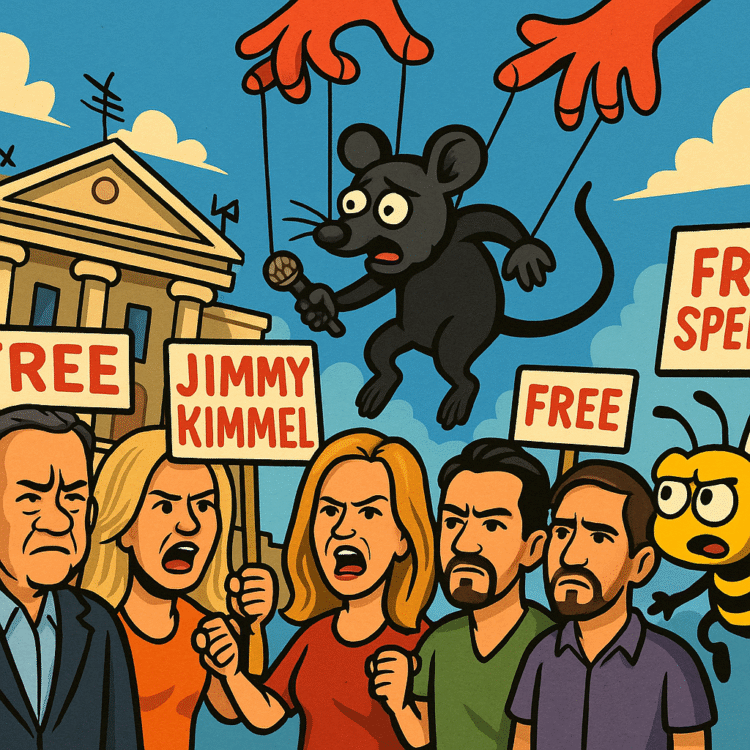
Disney can reanimate cartoon deer and resurrect billion-dollar franchises, but even they didn’t think they’d have to stage a primetime Lazarus trick for Jimmy Kimmel. Yet here we are. After an extraordinary two-week suspension of Jimmy Kimmel Live!—a late-night show that once got canceled only for recycling too many “Matt Damon” bits—Disney announced the show will return Tuesday night. That’s after an ACLU open letter, signed by over 400 artists, landed like a thunderclap across Hollywood and beyond, accusing ABC and its parent company of bowing to political pressure from the FCC and right-wing operatives who apparently believe free speech is reserved for podcasts where men shout about ivermectin.
The controversy began when Kimmel, never exactly a prophet of subtlety, joked on-air about Charlie Kirk’s assassination. Whether you thought it was gallows humor, poor taste, or just another night of Jimmy’s monologue writing room straining for a setup, it became an instant flashpoint. Within 24 hours, Brendan Carr, Trump-appointed chair of the FCC, went on record threatening “remedies” against ABC affiliates if “indecency” wasn’t addressed. Affiliates owned by Nexstar—one of the largest station groups in the U.S.—suddenly preempted Kimmel altogether. ABC followed with an “indefinite suspension” that looked less like corporate discipline and more like a hostage note.
And then came the letter.
The Letter Heard ‘Round Hollywood
On September 22, the ACLU published an open letter with more celebrity signatures than the cast of an Avengers movie: Tom Hanks, Meryl Streep, Jennifer Aniston, Ben Affleck, Selena Gomez, Lin-Manuel Miranda, Pedro Pascal, Shonda Rhimes, Kerry Washington, George Clooney, Quinta Brunson, and roughly 390 others whose assistants’ assistants made sure their names were spelled correctly. The language was blunt:
“We, the undersigned artists, strongly condemn Disney/ABC’s suspension of Jimmy Kimmel Live! following remarks made on September 10, 2025. Free expression is not a privilege granted at the discretion of government officials but a constitutional right. When the Federal Communications Commission Chair publicly threatens remedies and broadcast affiliates respond by silencing a critic, this crosses the line into government coercion by proxy. We call on Disney to restore the show immediately and for all affiliates to honor their contracts without political interference.”
This wasn’t just a list of Hollywood elites signing another Change.org petition. It was a rare moment of alignment across actors, directors, musicians, and writers, many of whom haven’t agreed on anything since the Golden Globes buffet line.
Disney’s Tightrope Act
Disney, sensing both reputational disaster and the whiff of First Amendment litigation, announced Kimmel would return on Tuesday. Their statement tried to straddle the impossible:
“Disney and ABC remain committed to supporting our talent and creative voices. The decision to pause Jimmy Kimmel Live! reflected internal deliberations about program standards, not outside influence. We look forward to welcoming Jimmy back on September 23.”
“Internal deliberations.” Yes, like when your boss “internally deliberates” with a flaming FCC letter on their desk and a half-dozen affiliates threatening to yank their licenses.
Nexstar, Sinclair, and the Affiliate Problem
Nexstar insisted it was simply exercising “editorial discretion,” which is an interesting way of describing taking a chainsaw to the First Amendment because Brendan Carr coughed in their direction. Sinclair, never one to miss an opportunity to prove that media consolidation is just monopoly cosplay, declared it would not return Kimmel to its syndication lineup. Their statement:
“Sinclair is committed to family-friendly broadcasting that reflects the values of our audiences. While we respect Disney’s decision, Jimmy Kimmel Live! will not be carried on our stations at this time.”
Translation: if your audience values grievance and reruns of Blue Bloods, that’s what you’re going to get.
The Timeline of Capitulation
- Sept. 10: Kimmel makes remarks about Charlie Kirk’s killing during his monologue.
- Sept. 11: Brendan Carr issues a statement warning of “remedies” against ABC affiliates.
- Sept. 12: Nexstar preempts the show across multiple markets.
- Sept. 13: ABC announces “indefinite suspension.”
- Sept. 22: ACLU letter drops, signed by over 400 artists.
- Sept. 22 evening: Disney announces return of Jimmy Kimmel Live! on Sept. 23. Sinclair syndication network says it won’t carry it.
Meanwhile, Trump and the FCC have gone radio silent. No apology, no clarification, no acknowledgment. It’s the authoritarian version of “seen-zoned.”
The Stakes: Jawboning and the Jawbone That Bites
This isn’t just about Jimmy Kimmel, whose career has thrived largely by pulling elaborate Halloween pranks on children. It’s about jawboning—the polite term for when government officials threaten “remedies” or “consequences” if a private company doesn’t bend. The Supreme Court has ruled more than once that government can’t coerce private actors to censor speech the state itself couldn’t ban. Yet here we are, where “remedies” equals “shut up or else.”
Advertisers, sensing danger, hedged. A few quietly pulled campaigns, then returned once Disney promised Kimmel’s return. Affiliates, however, hold the real leverage: they control the local pipeline of ABC programming. Nexstar’s willingness to fold under FCC pressure and Sinclair’s refusal to return Kimmel set a precedent: the next time a politician doesn’t like what a late-night host says, all they have to do is raise an eyebrow and watch affiliates censor for them.
The Precedent: When Grief Becomes a Bludgeon
The backdrop of this whole affair is the Charlie Kirk assassination—a tragedy that should have led to reflection, not weaponization. Instead, grief has become the cudgel by which officials test how far they can push media companies into submission. The fact that FCC threats directly followed a joke about Kirk makes it clear: this wasn’t about “decency” in broadcasting. It was about loyalty.
Why This Matters
The chilling effect is already here. Every writer in late-night knows it. Every executive in Hollywood feels it. The precedent that a late-night host can be silenced for mocking a political martyr figure will only encourage more demands. If the FCC can jawbone Kimmel, why not Colbert? Why not HBO, Netflix, or podcasts?
Disney’s reversal doesn’t erase the fact that they flinched. And once you show you can be cowed, you’re never uncowed again.
Closing Reflection: The Laugh Track of Democracy
America has always had an uneasy relationship with comedy. Lenny Bruce got arrested for saying “schmuck.” George Carlin got banned for “seven dirty words.” Jon Stewart was called unpatriotic for mocking Bush-era wars. But the Kimmel suspension marks something darker: not a fight over obscenity, but over political obedience.
That 400 actors signed the ACLU letter is notable not just because of who they are, but because of how fast they recognized the stakes. They’ve lived through blacklist seasons before. They know what it looks like when speech becomes conditional.
Jimmy Kimmel is back—for now. But the next time a late-night joke lands too close to the bone, don’t be surprised if the laugh track of democracy is replaced by the silence of affiliates switching to syndicated reruns.
Summary: Kimmel as Canary in the Coal Mine
Jimmy Kimmel’s suspension and hasty reinstatement mark a new low in America’s free-speech stress test. The FCC’s thinly veiled threats, Nexstar’s capitulation, Sinclair’s censorship, and Disney’s initial compliance show how fragile creative independence becomes when government pressure meets corporate cowardice. The ACLU’s star-studded open letter forced a reversal, but the precedent remains: officials can weaponize grief and “decency” to muzzle critics. For now, Kimmel returns to air. But the bigger question is whether anyone who speaks inconvenient truths can trust they’ll be allowed to stay there.