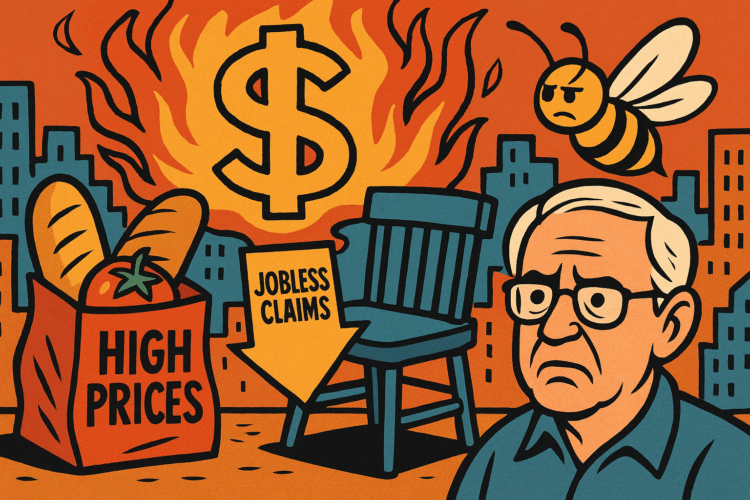
America, you can relax. Inflation is only at its highest pace since January, jobless claims are at their highest since October 2021, and the Labor Department has discovered that somewhere between April 2024 and March 2025, we misplaced nearly a million jobs. (Don’t worry, they’re probably under the couch with your missing socks and Biden’s approval ratings.) But it’s fine, really—because Wall Street shrugged, which is economist-speak for “we’ve made peace with doom.”
On September 11, the Labor Department confirmed what grocery store aisles and furniture showrooms have been screaming for months: consumer prices rose 2.9% year over year in August. Core inflation? A spicy 3.1%. Monthly gain? 0.4%. Stagflation fears? Back in vogue like low-rise jeans nobody asked for. Producer prices dipped, technically, but that’s like telling a drowning man the rain just stopped.
And while the Fed debates whether to cut rates next week—its first of the year—President Trump has already auditioned for Chairman of the Federal Reserve by tweeting that rates should be “cut very big, very fast, very strongly, and very patriotically.” Meanwhile, voters are staring at their tomato receipts and wondering if democracy is really worth $2.99 per Roma.
Tomatoes: The New Gold Standard
Let’s talk tomatoes. Thanks to Trump’s ~21% tariff on Mexican imports slapped on in July, your BLT now costs approximately the same as a down payment on a Tesla. Tariffs, of course, are marketed as patriotic—because nothing screams “America First” like paying more for salsa.
Furniture? Up. Apparel? Up. Even the dollar-store hoodie now costs two dollars, plus a “supply chain freedom surcharge.” These are the tariff pass-throughs economists warned about, but Trump insists it’s all part of his grand trade symphony. The man calls it a “one-time patriotic price bump,” but anyone with a Kroger receipt knows sticky inflation when they see it.
911,000 Jobs: A Casual Rounding Error
The Labor Department revised payrolls and—oops!—we lost 911,000 jobs. Nearly a million jobs, vanished like interns after HR training. This is not just a typo; it’s a confession. For a year, we were living in a labor-market fan fiction, convinced jobs were abundant, when in reality the economy was cosplaying “Lost.”
And yet, when presented with this revelation, markets yawned. Because in modern capitalism, a million jobs are background noise compared to a half-point change in core CPI. People may be unemployed, but as long as Apple’s stock buyback plan is intact, the system is “resilient.”
Fed vs. Trump: The WrestleMania Nobody Asked For
The Fed is considering its first rate cut of the year, a modest attempt to keep stagflation from sticking like cheap wallpaper. But Trump is pressuring them to cut rates “big.” For him, monetary policy is like a steak: it should be well done, drowned in ketchup, and served immediately.
Jerome Powell, meanwhile, sits in the corner muttering about “data dependence,” which is economist code for “we have no idea what we’re doing, but we’d like to maintain the illusion of control.” The Fed is trying to walk a tightrope between inflation and recession while Trump shakes the rope and screams “cut faster.”
Stagflation, But Make It Patriotic
Remember stagflation? That cursed combination of rising prices and rising unemployment last seen in the 1970s, when bell bottoms and gas lines were in fashion? Well, it’s back, only this time it comes with tariffs, memes, and a soundtrack of Kid Rock at campaign rallies. Call it Stagflation Lite™: fewer jobs, pricier groceries, but still marketed as freedom.
What makes this version especially absurd is that producer prices dipped in August, technically. But “producer prices” don’t pay rent or buy tomatoes. Consumers do. And the consumer is staring at a checkout screen that reads like an obituary for purchasing power.
The Markets Shrug Because They’re Sociopaths
Markets shrugged at the inflation and jobs report. Of course they did. Markets don’t feel, they price. To them, your layoff is just “margin optimization.” Your tomato surcharge is “headline noise.” Investors aren’t worried about your rent—they’re worried about whether the Fed cuts 25 or 50 basis points so they can decide between a second yacht or a third.
This is the satire of late capitalism: the worse it looks for workers, the better it looks for equities. Wall Street would happily watch America burn if it meant a slightly higher return on index funds.
Trump’s Tariff Reality Show
Trump has built his reelection campaign on tariffs the way he once built his casinos: overleveraged, short-sighted, and destined to collapse while he insists it’s a “big success.” Tariffs, he promises, will bring jobs home. Instead, they’ve brought price tags home.
And yet his base cheers, because in the American imagination, tariffs are not taxes. They’re patriotic shields. Who cares if salsa costs more, as long as the packaging says “Made in America”? Unity is now measured in sticker shock.
The False Choice: One-Off Bump or Slow Burn
The debate among economists is whether this is a one-off price bump or a slow burn that keeps inflation sticky through 2026. That’s like asking whether your house fire is a flash blaze or a smoldering ember that will reignite every time the wind blows. Either way, the wallpaper’s gone.
The sticky part is real. Once tariffs raise prices, companies rarely lower them. That’s why your soda is still $2.49 even though sugar prices fell years ago. Inflation sticks like gum to your shoe—and tariffs are just fresh globs on the sidewalk.
Voters: The Real Data Point
Ultimately, the only data point that matters is voters. They don’t care about CPI baskets, core vs. headline, or 25-basis-point cuts. They care that groceries cost more, that jobs feel less secure, that paychecks don’t stretch. And they will judge accordingly.
Trump is gambling that voters will blame “foreigners” for high prices rather than his own tariffs. He’s betting that they’ll see job losses as necessary patriotism. And he might be right—because Americans love a villain more than they love nuance.
The Satire of Stagflation Lite™
The real satire here is how predictable it all is. Tariffs raise prices. Inflation sticks. Jobs evaporate. The Fed dithers. Markets shrug. Politicians spin. And through it all, consumers pay more for tomatoes, shirts, and couches while being told it’s all for the greater good.
It’s stagflation, yes, but branded. Marketed. Hashtagged. Stagflation Lite™, now with extra patriotism and no refunds.
Summary of Stagflation Lite™
The August report shows inflation accelerating (2.9% headline, 3.1% core), jobless claims spiking to 263,000, and nearly a million jobs quietly vanishing from last year’s payrolls. Tariffs are pushing up costs on everything from furniture to tomatoes, while Trump demands the Fed cut rates “big” and “patriotically.” Markets shrugged, but consumers can’t. The question is whether this is a one-off bump or a sticky slow burn—and the satire is that we know the answer already. Inflation doesn’t un-stick, tariffs don’t vanish, and voters eventually revolt. America isn’t just living through stagflation—it’s buying the deluxe edition, complete with slogans, memes, and overpriced produce.